Jake Harris has completed Spain’s residency process three times during his studies in Madrid, spending weeks refreshing appointment websites and gathering documents to remain legally enrolled. Before memorizing metro routes or settling into student life, Harris, like thousands of other non-EU students, was navigating Spain’s immigration bureaucracy.
“I thought the hardest part of studying abroad would be studying,” said Harris, 20, a junior from the United States. “No one warned me it would be learning the immigration system.”
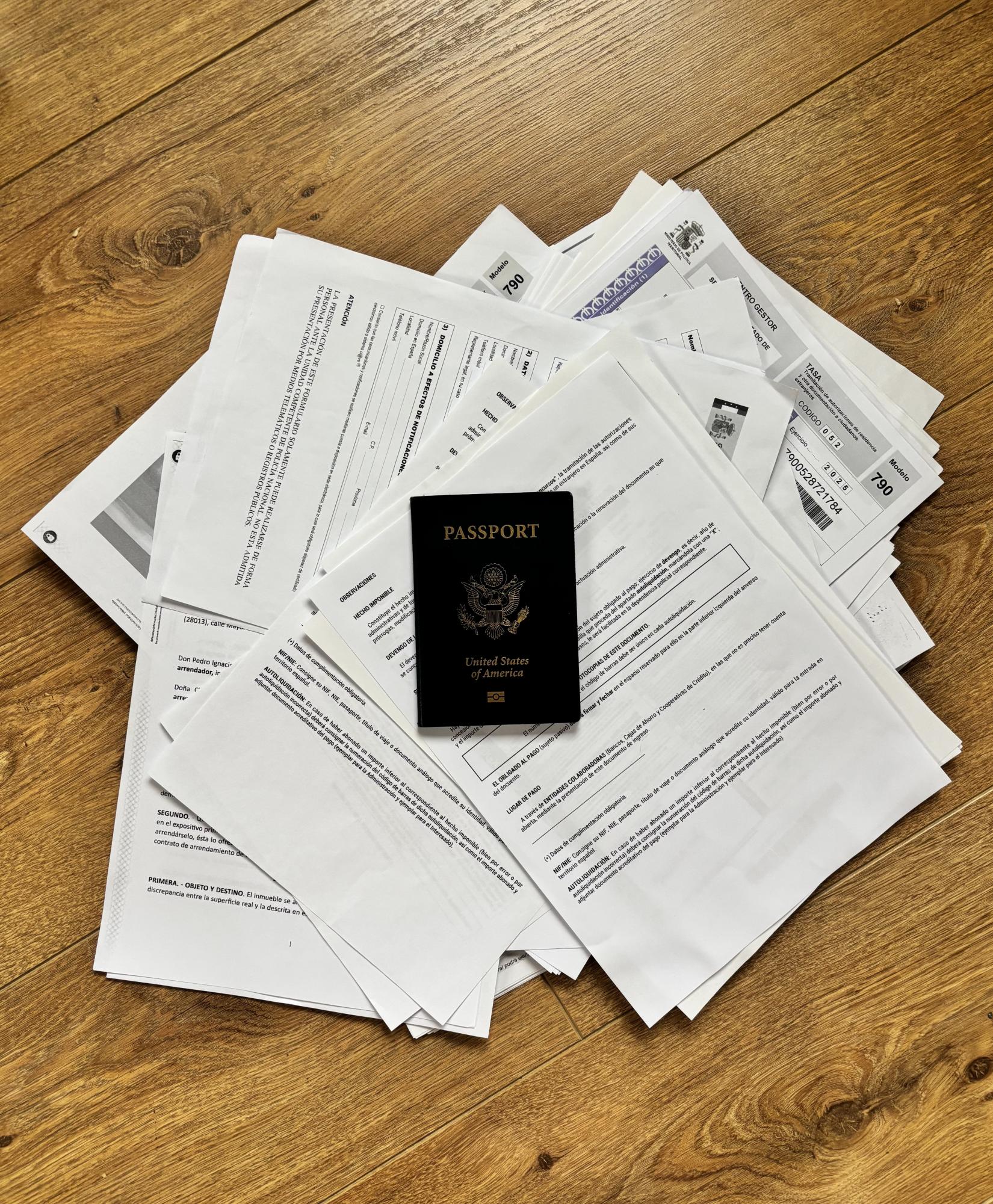
The process of obtaining the Tarjeta de Identidad de Extranjero, known as the TIE, is a confusing rite of passage for foreign students in Madrid. Appointment websites frequently crash, digital platforms operate entirely in Spanish, document requirements vary by visa type, and instructions differ by police station, students say.
In May 2025, the Spanish government digitized much of the TIE process. Under the new system, students are required to obtain a digital form of identification in order to submit their documents online. That means applying for a Certificado Digital, which allows users to securely access Spanish government platforms and sign documents electronically.
While the update was intended to modernize the system, students report struggling to understand new technical requirements, with some forced to restart the entire process after submitting documents incorrectly. Each step comes with different guidelines, often available only in Spanish.
UAnce Celine, 28, from Mauritius, remembers completing her TIE while studying in Madrid several years ago.
“I thought the TIE process then was difficult. Now it’s a whole new thing,” said Celine, a former student now working in advertising in Madrid. “I can’t even imagine what it’s like now with all the forms and checklists. I feel sorry for students applying today. It’s confusing.”
Celine completed all her paperwork under the old system, waiting in long lines, in both rain and sun, at the Aluche National Police station, one of the most commonly used immigration offices for foreign students in Madrid at the time.
The university provides limited aid with the TIE process.
“Students are responsible for their own legal status (TIE),” Saint Louis University’s website says.
David Navarro, 28, an American lawyer now practicing in Madrid, recalls similar stress while completing the TIE process as a student.
“The Spanish government releases fingerprint appointments randomly,” Navarro said. “And it could be at any police station in Madrid.”
Navarro described sitting at his laptop refreshing the appointment page, watching time slots disappear within seconds as thousands of students competed for availability.
Before the system update, fingerprinting appointments were often the most stressful step. Now, they remain scarce.
Volodymyr Lakomov, 29, from Ukraine, completed his TIE paperwork alone after his university mishandled his documents.
“My university didn’t provide any guide,” Lakomov said. “I had to figure everything out myself. That mistake cost me an entire month.”
Lakomov compared Spain’s system to Ukraine’s digital platform, Diia. “In Ukraine, everything is on one app,” he said. “Passport, vaccines, even your criminal record. You can request one and get it in seconds.”
Despite the challenges, Lakomov has since helped other students submit documents through Mercurio.
“The Spanish government needs better IT engineers. This system is awful,” Lakomov said, describing difficulties with the Chrome browser.
Once documents are submitted, students must secure fingerprinting appointments, and wait for approval. If travel is necessary, they must apply separately for an autorización de regreso, a temporary travel permit allowing departure from Spain while documents are pending.
Not every experience ends in stress.
Alexander Renschen, 18, from the United States, described his first-time TIE process as “easy but also difficult.”
“I did mine through MTS,” said Renschen, an international business major, referring to a consulting service that deals with visas and document submission. “They were a lifesaver.”
The final step is collecting the physical residency card. A small plastic ID the size of a driver’s license. But the relief is bittersweet. “The hardest thing I’ve done abroad wasn’t academic,” Lakomov said. “It was learning how to survive bureaucracy.”