

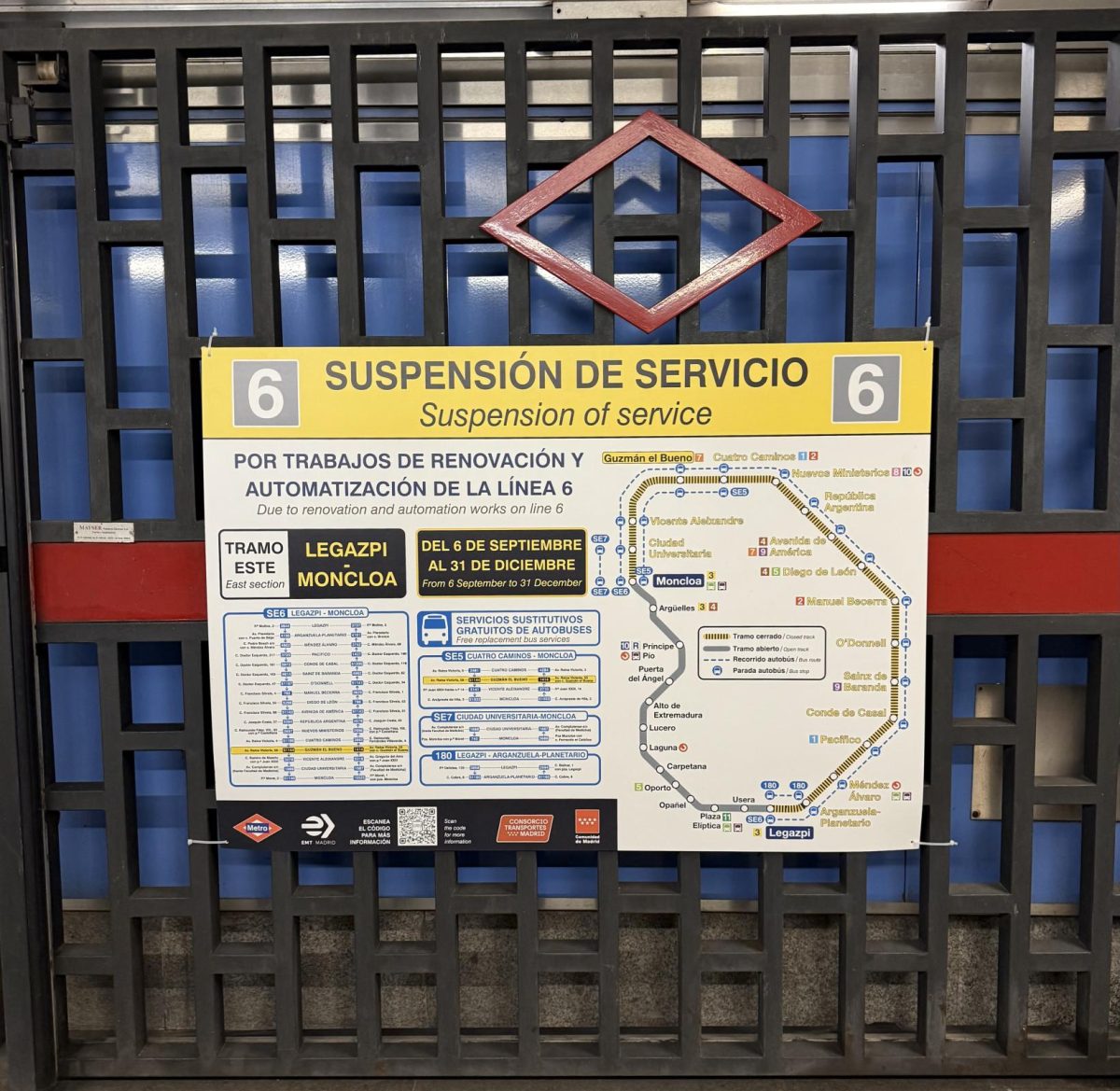



















Commuters are expressing frustration at delays caused by the partial closure of Madrid’s Line 6 metro line, which has been under renovation since early September.
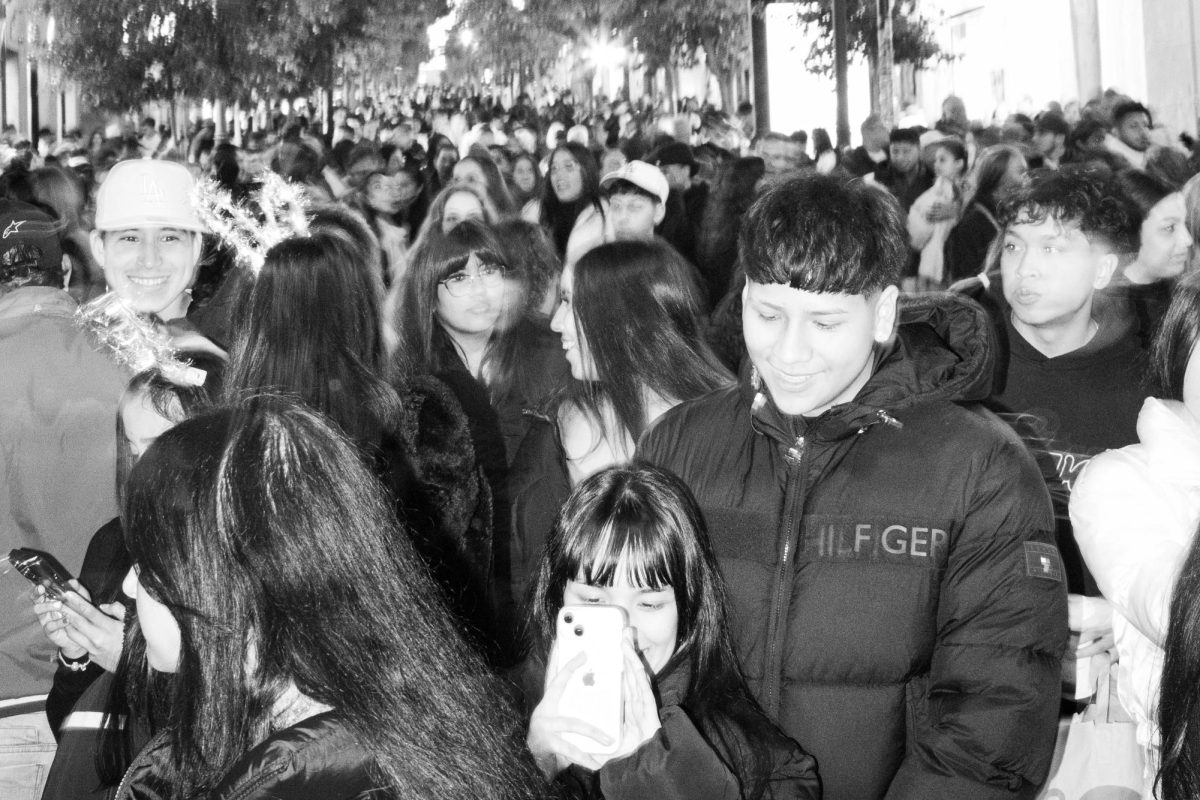
“I feel overwhelmed all the time,” said Lara Sanzsa Garcia, an 18-year-old student living in Madrid and studying elementary education at the Universidad Complutense, which is located at the Ciudad Universitaria stop. “Lots of days I have to take the bus earlier because in the mornings it’s filled with people, and I arrive late to class, and sometimes I’m not able to go into class if I arrive late.”
The tracks between Moncloa and Legazpi are shut until Dec. 31 to prepare the tracks for self-driven trains , according to the Metromadrid website. For the affected students and workers, several alternatives have been offered.
There is a free bus service called SE6 that travels through the affected route in both directions. The bus is supposed to pass around every 10 minutes, helping people get to their destinations as efficiently as possible, the website said.
“However, it’s been very challenging,” commented Maria Eugenia Gomez, a 25-year-old clinical psychologist who relies on public transport daily. “Although the SE6 bus runs every 10 minutes, during rush hour it’s almost impossible to find a seat. The buses are very full, and sometimes even left waiting for the next one just to squeeze in.”
Many commuters on other lines also noticed the change. “Actually, there are much more people using line 5, since it is more crowded than usual,” said Marjorie Postigo, a 30 year-old from Peru who works at JW Marriott Hotel.
Some commuters questioned the timing of the renovation. “I don’t understand why they closed this side of the metro now and not in summer, because this side of the metro is mostly used by university students, and most of them are not even in Madrid, since in months like August, Madrid is a ghost town with hardly anyone,” said Ivanna Rivera, a 21-year-old engineering student from Venezuela. “Using the special service bus in the mornings, one has to go with lots of time because if not, one can’t get in.”
Many commuters complain of longer travel times. “It used to take me about 30 minutes to arrive from Manuel Becerra to Guzman el Bueno, but now I have to walk more and leave my house earlier so I can arrive on time to university,” said Patricio Gonzales, a 23-year-old law student from Madrid studying at CEU San Pablo.
The extra commute complicates the routine for many SLU-Madrid students.
“It frustrates me because I have a dog, and I have to walk him every morning,” said Sasha Gery, a 22-year-old psychology major. “Sometimes, I don’t even have time to eat breakfast, because I never get enough sleep and I’m running very late.”
Eva Palmer, a sophomore, lives around an hour away from Madrid by bus. “Line six was the easiest and most direct option,” she said. She looks on the bright side: At least she doesn’t miss the crowded Line 6 cars at rush hour. “I can say I’m happy not to have to smell people’s armpits so early in the morning, though,” she said.
Another student, Joseph Hansen, said going to campus used to be an easy30-minute ride on Line 6. Now it takesalmost an hour, or 50 minutes on a good day. “Instead of taking the metro stop that is 8 minutes away, I now go to the one 15 minutes away, uphill,” he said. “I now also have to transfer trains, which has made me late to a few classes.”