




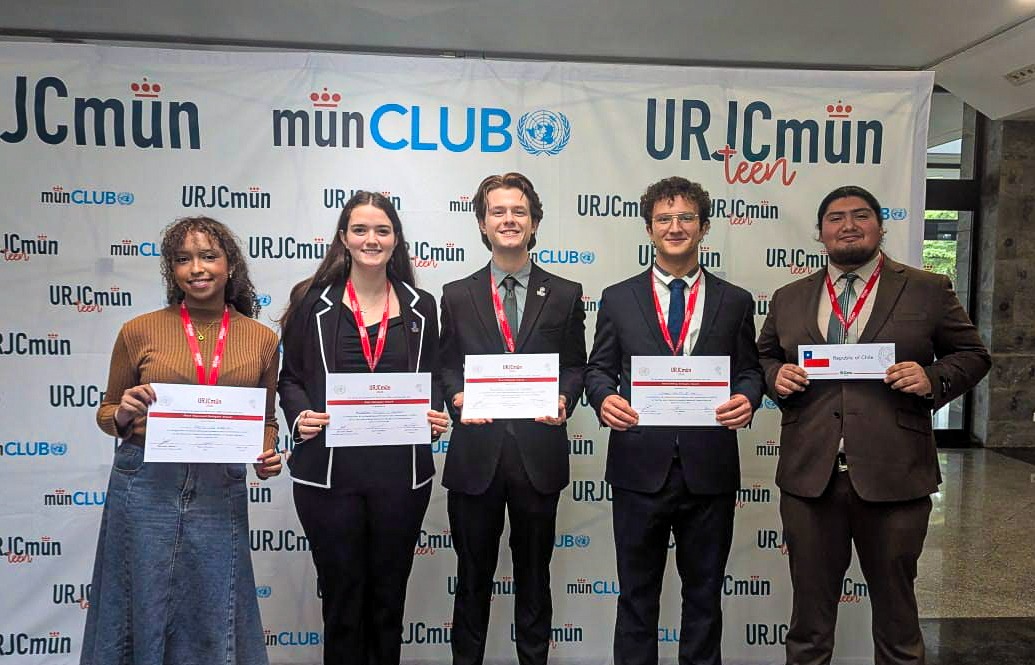




SLU-Madrid’s first ever Model United Nations club (SLUMUN) is winning awards at universities across the city. Following their success, SLUMUN is gearing up to host their very own conference this April.
The club is new on campus, after sophomores Raelyn Butler and Kyle Sidwell founded it in Fall 2025; however, they have already made strides in the Madrid circuit.
But what exactly is Model UN and how does it work?
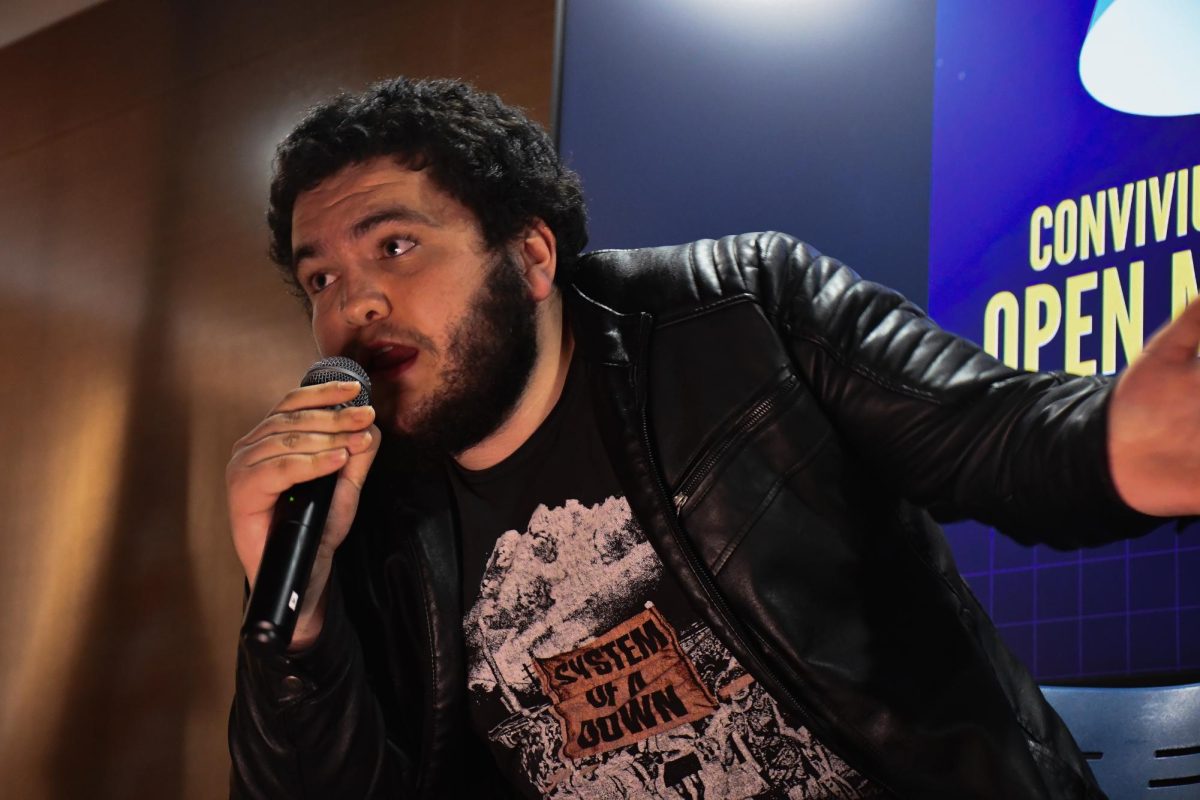
As Sidwell puts it, “MUN is a form of political debate rooted in international relations because you’re representing a country.” Prior to a conference, competing delegates from a variety of universities are assigned to a nation and must research its policies and relationships. Preparation includes writing a position paper outlining that country’s stance on the issue being debated.
Conferences are structured into committees such as the UN Security Council, NATO, or the Human Rights Council. Within each committee, students debate alongside and against one another, moderated by chairs who enforce formal rules of procedure. As Butler explains, “The debate is modeled depending on the real-world responsibilities and the jurisdiction of those agencies.”
“The point of these committees is to pass what’s called a resolution,” Sidwell says, referring to the final policy proposals that delegates collaborate on after days of negotiation. The process mirrors real-world diplomacy in both structure and intensity.
“It’s an entire sect of your social life that happens,” Sidwell says. “You spend a very substantive amount of time dedicated to it, almost to a degree where it feels like an internship.”
For a young club, SLUMUN has already made a serious mark. Members have brought home awards from conferences hosted by Complutense, IE, Universidad Europea and Universidad Rey Juan Carlos, which is one of the largest Model UN events in Europe with around 1,400 participants.
“It’s a really important and large conference and we won a third of all of the awards that were eligible to have been won in the English committee,” said Sidwell.
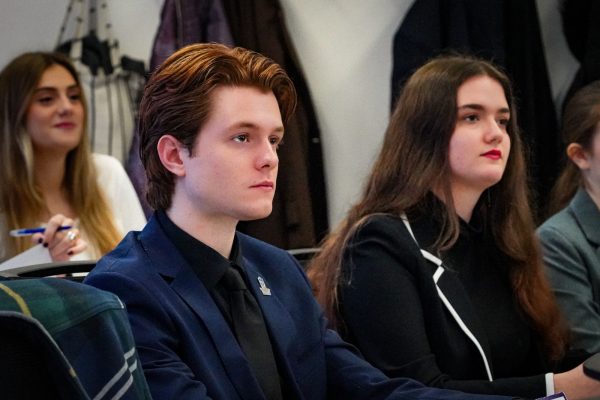
SLU delegates have earned top placements across various high-level committees, including multiple first and second place finishes, most improved delegate, and several honorable mentions.
“The chairs are watching everyone in the room debate, and on the final day they make the case of why they think each delegate should be awarded each place,” said Butler.
Even with the pressure to secure the coveted ‘Best Delegate’ award, attendees wind down after each debate day the Spanish way: partying.
“You see the same faces for four days straight, and you go partying with them every day. So it’s essentially a weekend long, intensive hangout,” said Butler.
“I’ve made almost all of my friends that are Spaniards through Model UN,” she continued. “And it’s like that for a lot of people. There are a lot of really close, long-term friendships.”
These relationships are an integral part of their desire to compete as both Sidwell and Butler noted a phenomenon they call the “SLU bubble”.
“Permanent students tend to find a pseudo lack of fulfillment because it is difficult enough to immigrate to another country, it’s another thing trying to integrate,” said Sidwell.
In an effort to realize that vision of integration, SLUMUN will host its own conference in late April. The two day “mini-MUN” will be the first event of its kind at SLU, with invitations being sent to 10 universities across Spain and Europe.
For Butler, this social aspect is what drives the appeal of MUN and being involved. She hopes that SLUMUN will provide an avenue to close the gap and allow students to connect beyond the walls of SLU.
“There’s a disconnect between the SLU-Madrid community and the greater Madrid community,” she said. “I wanted to bring Model UN to SLU because I understand the importance and the desire to meet people at other universities, and students should have that.”