














In the quiet neighborhood of Lavapiés, in a small inlet against a brown brick backdrop, a chimpanzee face stares out at passersby. One side of the beige building holds half of the chimpanzee’s face painted in rainbow geometric patterns. The face is completed on the adjacent wall, constructed out of metal and plastic scraps, and painted in neutral tones.
“Wait, stop. I need a picture of this,” says an American tourist as they pass by, holding the others in their group up. “That’s so different.”
“I know. I walked by it the other day and it almost scared me,” comments the girl’s friend as they all move on.
As people walk by the building and sit on the benches nearby, their gazes linger on the face. Multiple people, possibly tourists, stop to take a few photos of the chimp before moving on down the street. The mural does not demand attention but manages to capture it from all who walk past.
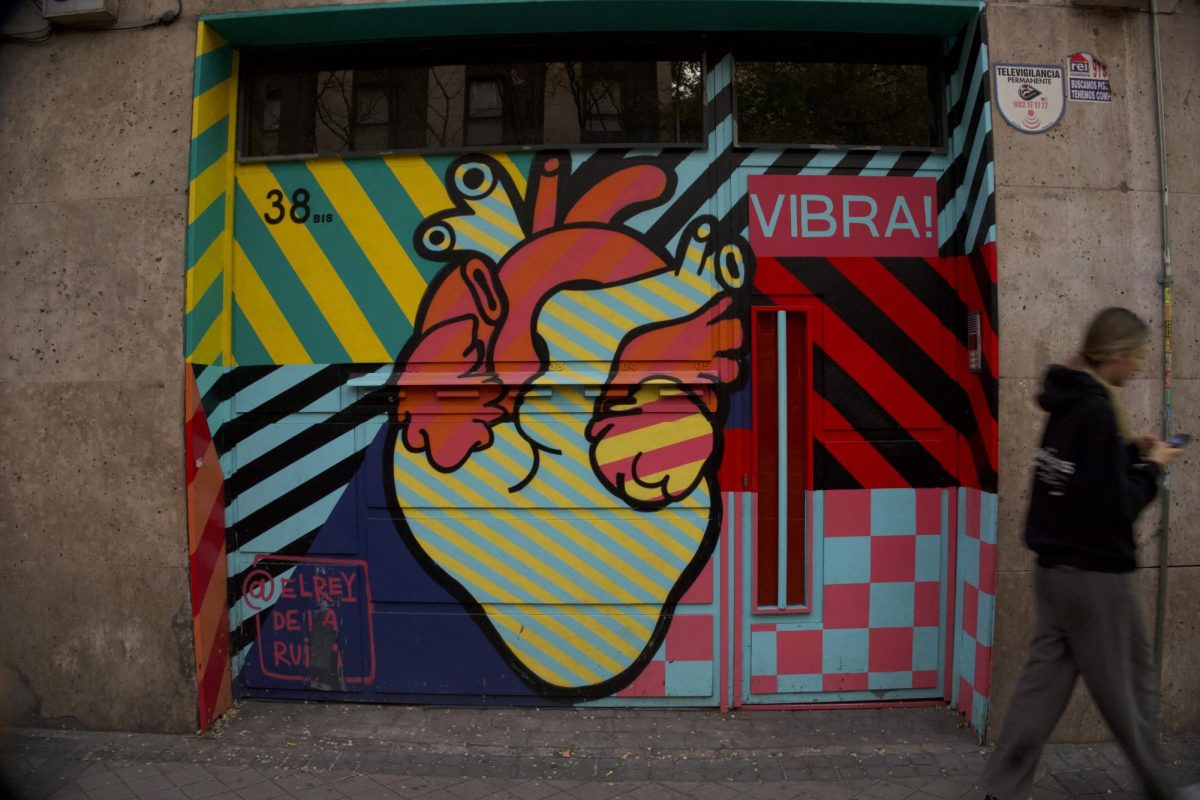
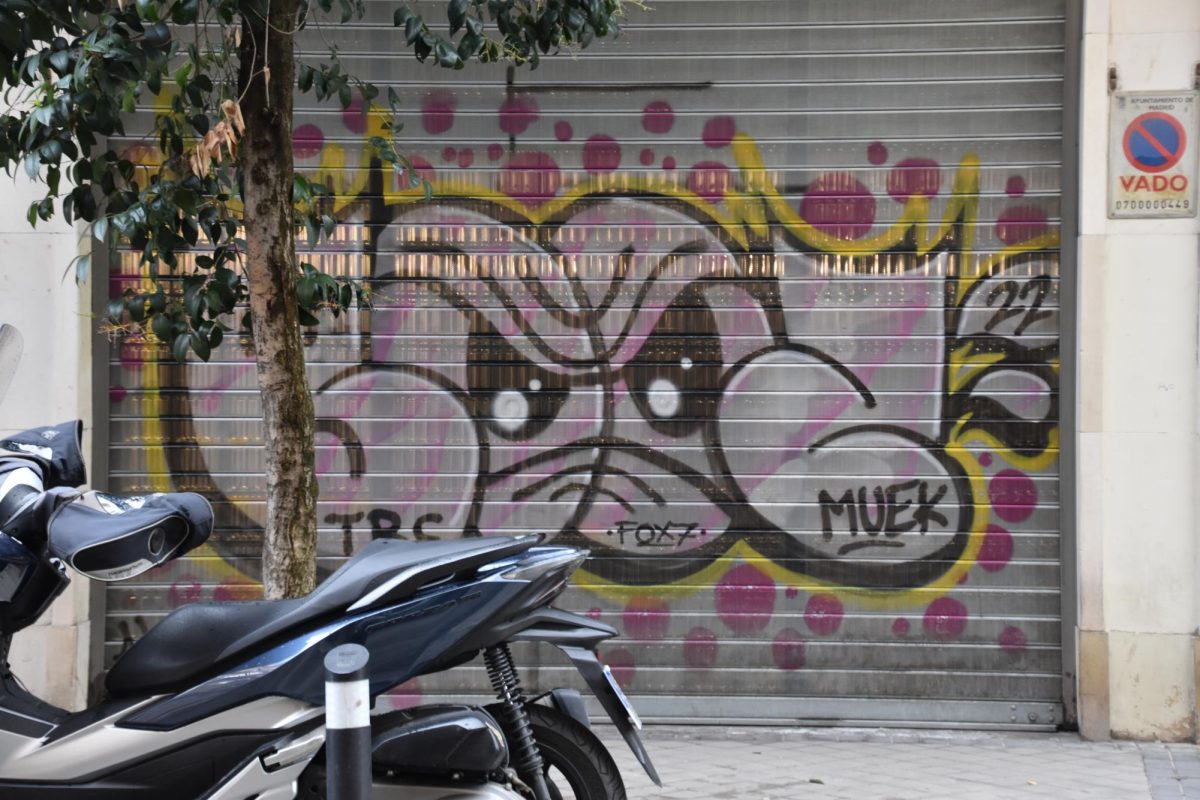
Walking through Madrid, it is impossible not to notice the art. Across the colorful buildings, unique architecture, bustling main roads, quiet side streets, corner stores, schools, and playgrounds, art is abundant. Colorful murals, endless amounts of graffiti, and striking tags line the walls of Madrid. Once you begin to notice it, you realize that no corner of the city is unnoticed.
“I like it, I think it puts color in the streets,” said Natalia Kowal, a French native who has been studying abroad in Madrid. “They beautify the neighborhood in some ways and give a new atmosphere to the areas they are in.”
Kowal is not the only one who has come to appreciate Madrid’s street art and murals.
After being recently named the world’s best city for street art, Madrid is officially on the map for its 425 masterpieces of street art. This ranking comes from Street Art Cities, a global community of hunters and artists that post street art on an online forum and host competitions regulated by moderators and voted on by the public.
But how do we know when street art is art, not just graffiti?
“For me, it is only art if people have to think about it and think their art through, not when it’s just a scribble,” said Amirah Sarmiento, a French study abroad student.
Kowal agreed.
“If it’s a mural and there are many colors and shapes and meaning and you can see it’s a work piece, I would say it’s art,” she said.
Graffiti is more commonly characterized by the spray paint scribbles and short tag lines often containing profanities that also cover many of Madrid’s streets.
Unauthorized graffiti is illegal in Madrid and considered vandalism, whereas street murals can be permitted through authorized events or sponsored programs. According to Art Madrid, events such as Pinta Malasaña and Calle Lavapiés allow local artists to paint on shop shutters and walls for a day to promote artistic creation within the neighborhoods. Murals can also be legal if the artist is given permission by the owner of the property on which the artist is painting.
According to Alumdena Olondo, a professor of Spanish history and culture at Saint Louis University’s Madrid Campus, the city’s street art has evolved over the decades. Before the city was known for its large-scale works, smaller tags and graffiti were more common in the streets and on metro cars. The shift towards detailed and meaningful murals began after the death of dictator Francisco Franco in 1975.
Olodno explained that during the 1980s, the cultural movement, La Movida Madrileña, transformed Spain, as art, music and fashion became important outlets for self-expression following decades of repression. This era gave birth to the pioneer of Madrid street art, an artist by the tag Muelle, who covered much of the city in his own work and inspired other artists.
“The streets here are so close together, there are walls everywhere, so artists have space to create,” said Maeve Loughran, a study abroad student turned Madrid resident, when she decided to move back for a year. “And because people in Spain are so connected to their culture, that creativity just spills out into public spaces.”
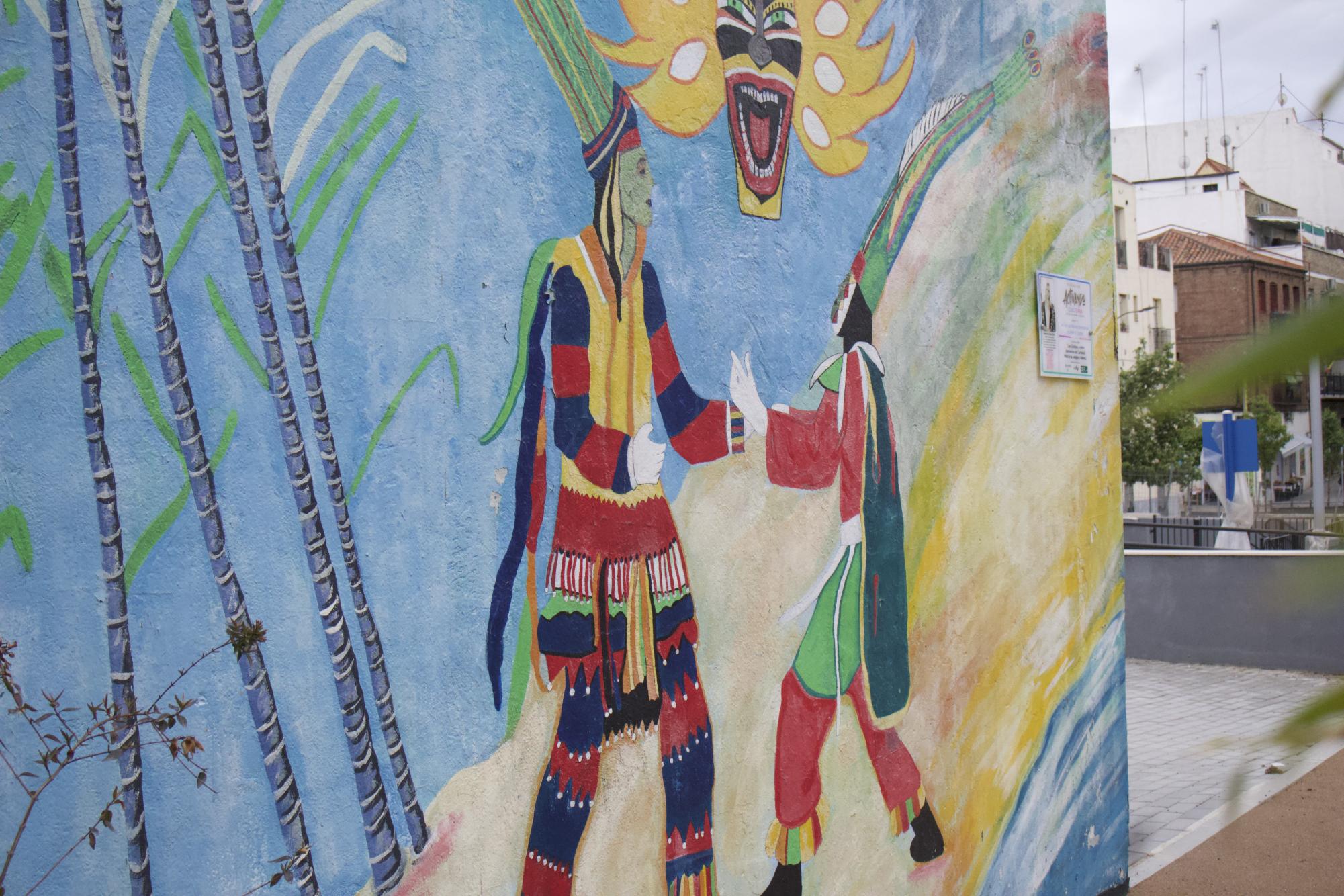
Some of the street art contain political meanings or celebrate expressions of gender and sexual orientation.
One of the most famous feminist murals, “La Unión Hace la Fuerza,” or “Union Makes Might,” is located in the Ciudad Lineal district. It sits upon a chainlink fence on the side of the road against a pink backdrop. It portrays 15 influential women of diverse origins and ethnicities in large scale paintings. Women such as Frida Kahlo, Nina Simone, and Rosa Parks all look out on the street, painted in hues of pink. A slogan is painted in large pink and red letters beside them: “Las capacidades no dependen de tu género,” or “Ability doesn’t depend on gender.”
“When I’m visiting a country, and I know there is a street art place, I like to go visit and see the art,” said Camille Caval, a French student studying abroad in Madrid. “I think it’s something good for a city to have a place with street art, it’s a bit of the city.”
For some residents, the significance of street art runs deeper than tourism or aesthetics.
“In some ways, they serve as open museums because it is contemporary art connected with the ideas, the interests, and the points of view of the young people,” said Olondo. “It is another way to make young people interested in art.”
Street art is more than just a colorful blurb on the side of the road for the people who live here.
“It’s a part of who we are, it’s another way of contemporary art,” Olondo says. “The museums stay the same, but the streets show who we are right now.”