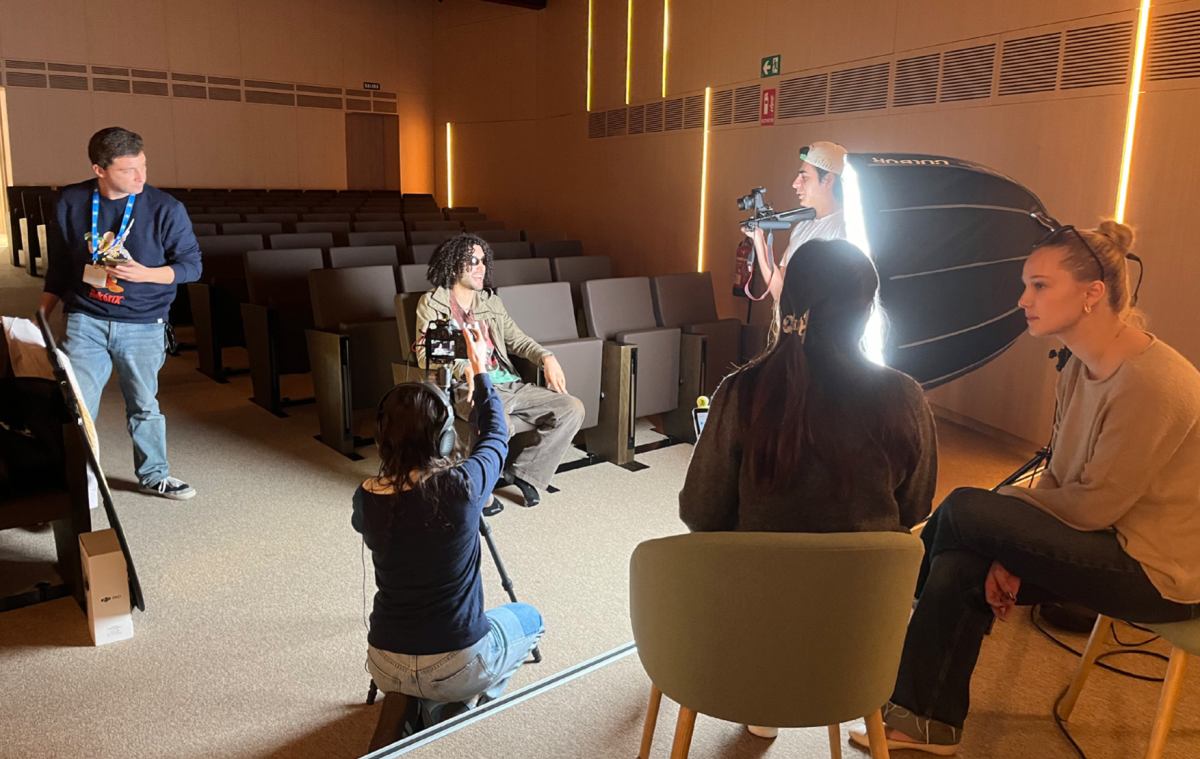
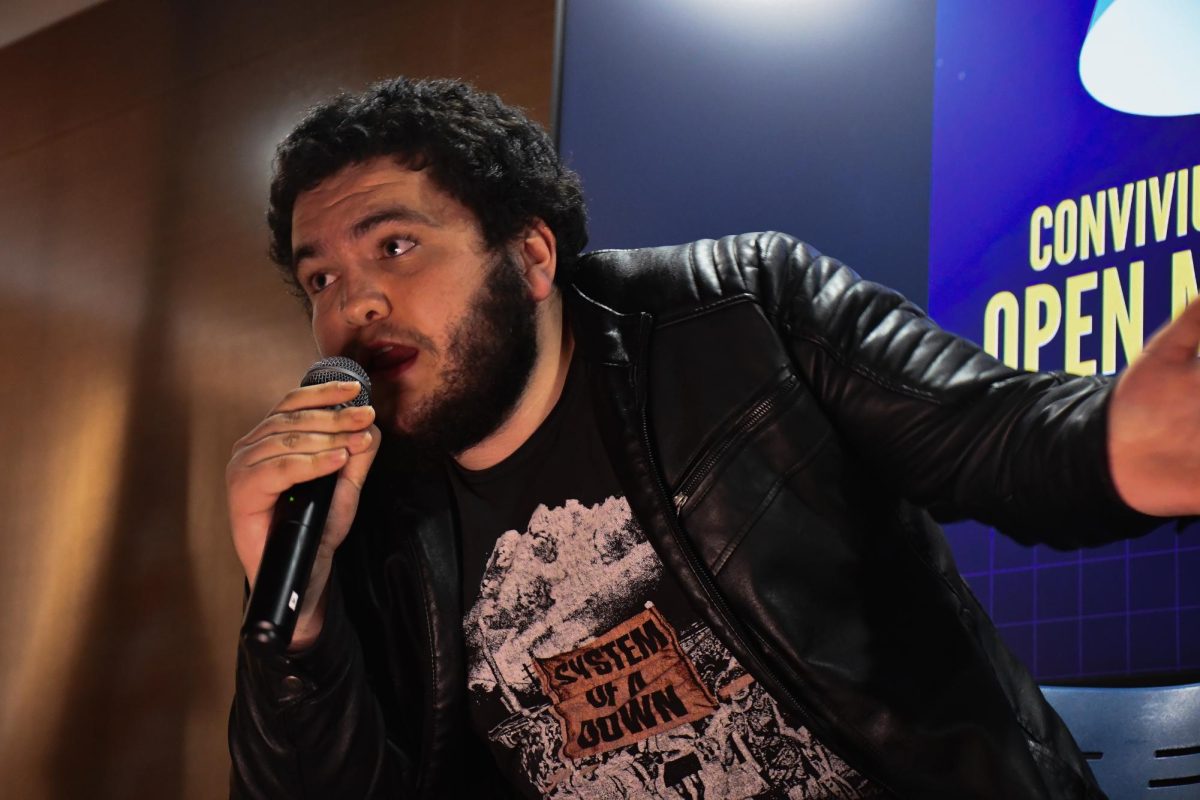

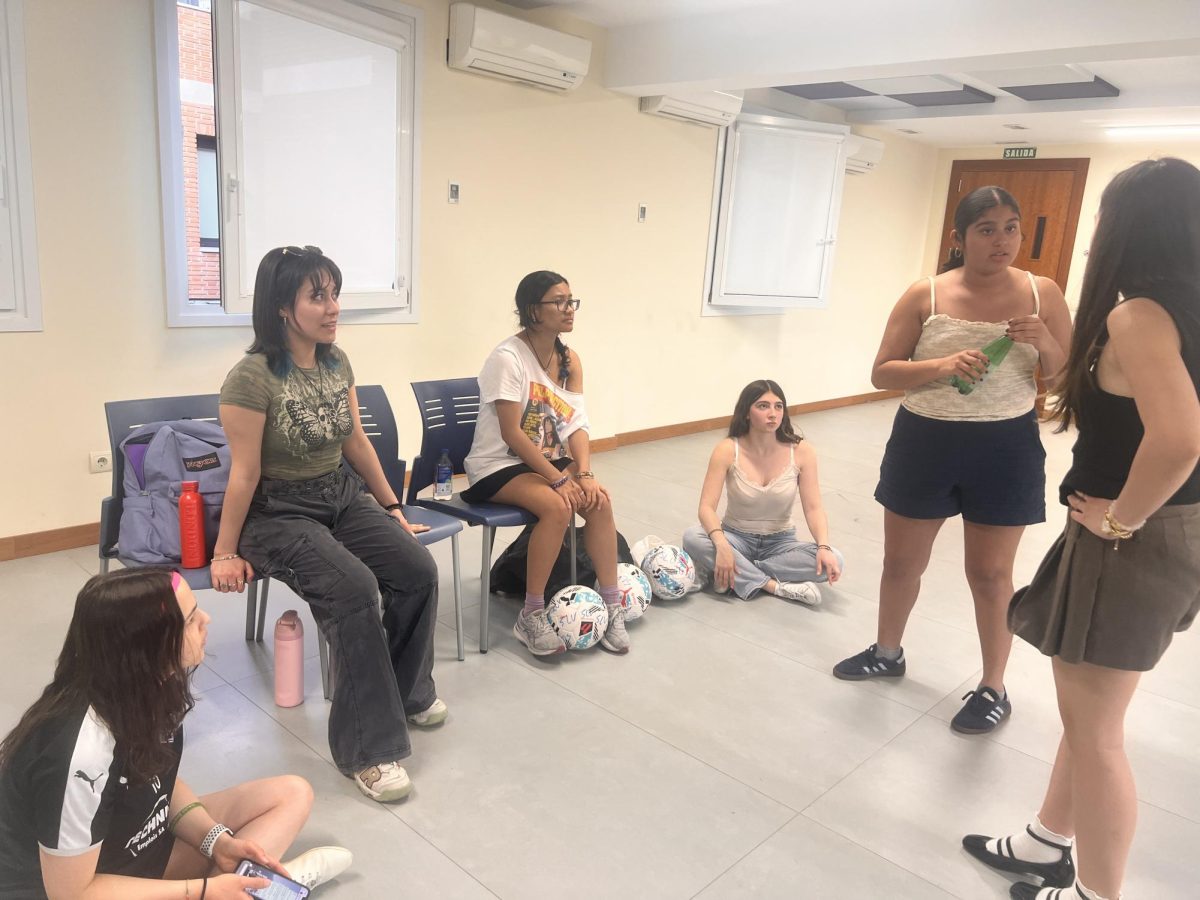





























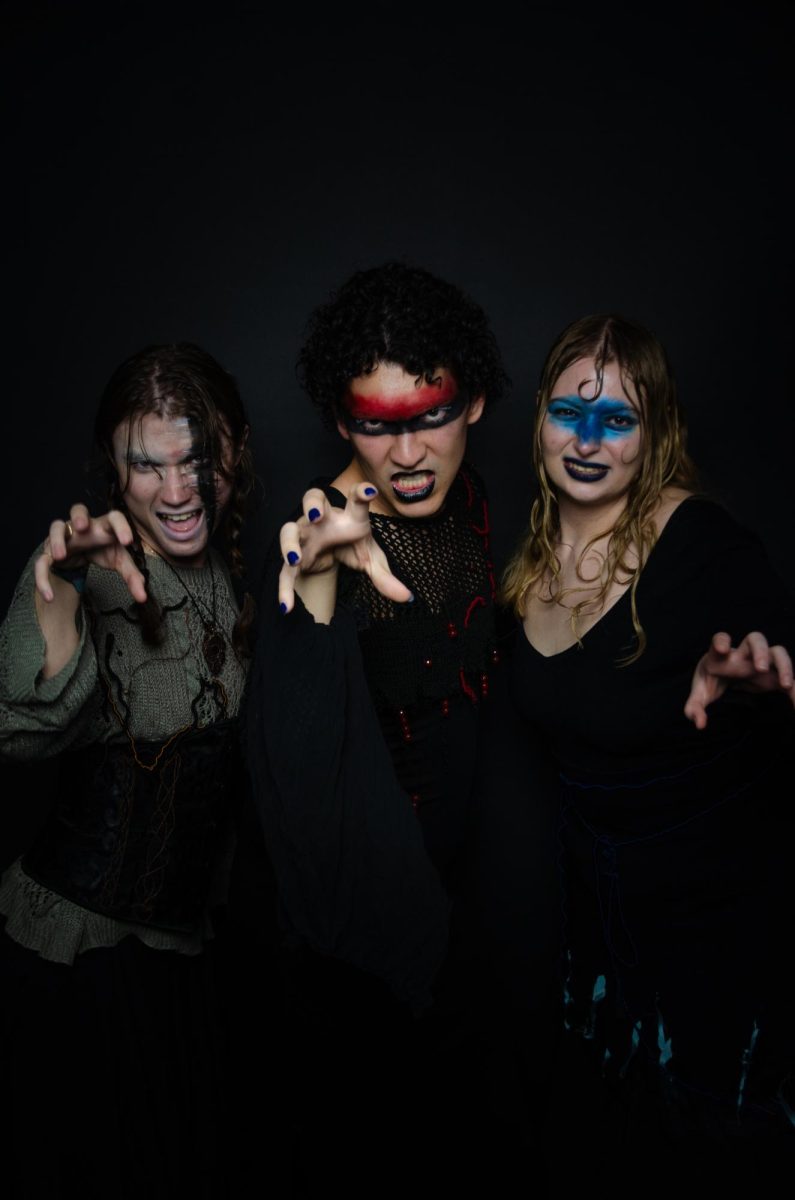
In the theater world, actors refer to Shakespeare’s Macbeth as “the Scottish play” in order to avoid saying the title character’s name — or else risk a curse on the theater troupe’s current production. This semester, SLU-Madrid’s Theater Department embraced the twisted tale and made it their own. The cast of 17 students, under the direction of Prof. Eloy Gomez Orfia, performed on Dec. 4 and 5 at Jana Producciones theater, a short metro ride from campus.
The text is mostly the bard’s original– iambic pentameter with lots of ¨thys,” “thous” and “haths” as well as the famed trochee of the witches’ song, “Double, double, toil and trouble” — but some scenes were removed for brevity. The modern twist comes with the costumes, make-up and special effects for the witches and apparitions. The effects were secret at press time.
At the announcement of the show, students were both excited and hesitant to tackle Macbeth. “As an actor, doing Shakespeare feels like a must,” said Ernesto Lange Rooks, a junior. “It is exciting to have this under my belt.”
Gabriela Rittley, a senior who has participated in every SLU-Madrid production of her college career, unpacked the differences she has noticed in her process. “I couldn’t start with memorization,” she said. “First I had to recognize the pattern, learn and truly understand what the verse meant before I could start rehearsing.”
“It wasn’t just learning lines, it was practicing, and researching to fully understand the context of my scene,” Rittley added.
Leticia Mondada is a senior who is both cast and crew this semester. “There is a lot of potential for this show,” Mondada said. “Especially on the production side of things, a lot of good ideas are being put on the table. Eloy’s vision for the show is contemporary and our crew is taking a lot of inspiration from the initial concept.”
A contemporary display of a traditional script is not a new concept in regards to theater production. However, it is difficult to get just right. Balance is key and requires the efforts of the cast, crew, and directors.
“It is definitely ambitious, but I mean that in the best way possible,” said Lange Rooks. “Everyone is pulling out all the stops. This is also the biggest cast we have had since I started acting at SLU.”
“So far, this has also been the most stressful part: How are we going to execute all of these different ideas? What is the best way to coordinate everyone’s efforts?” Mondada said in an interview a month before showtime. “The final product is still up in the air, but that is what makes the process rewarding.”
Gómez Orfila, the director, chose Macbeth because of how it speaks about power and its consequences.
“Sprinkle some witchcraft, stage combat, and beautiful language and you have a treat for any theatre company to produce,” Orfila said. “Macbeth is, to date, one of the sharpest looks at what power and the idea of it does to people.”
Gómez Orfila said this production will be a great way for students to immerse themselves in a different version of Macbeth while supporting a student cast and production team.
While Macbeth is a classic, it still has relevance in our lives today, he added.
“If you scroll on social media, open a newspaper or turn on TV, you quickly realize we are surrounded by people desperately clinging to or fighting for power,” he said. “I can only hope that, upon watching the show, audiences will, if not change something, at least talk about whether things should change or not, and what the consequences of either choice are. I think it will be hard for them not to recognize the Witches, or Lady Macbeth, or, of course, Macbeth himself in faces they know.”
Although he is leading the production, Gómez Orfila credits his cast and crew with shaping major creative decisions.
“We have such a diverse team, with different backgrounds, interests, and goals for the future that they make me become a better storyteller as a director,” he said. “They make me more conscious of my audience. And they bring some amazing ideas — the whole opening sequence of the show came to life from a conversation with our lighting designer, for example!”
Sam Plank, who plays the leading role of Macbeth, has been involved with theatre since high school and has acted every semester he has been at SLU.
What was the most challenging part of taking on this role? “Lots of lines to memorize — I’m not used to this big of a part,” he said near the start of this semester’s rehearsal. “We’re not that far into the production process so I’m sure things like fight choreography will be the primary challenge later down the line.”
Like the director, Plank stresses how well cast and crew collaborate on the production. “I would say everyone has ideas for what would look good or be funny,” he said. “Not that this show is very funny, but if someone has, like, a spark of inspiration, those ideas improve the performance and add the little details that make the show fun.”
The director, Gómez Orfila, hopes that the audience leaves wanting not just more theatre, but deeper conversation. “I want our audiences to dare to experience art and its conversation from a more honest, human place,” he said.