





One December afternoon, everything changed for then 10-year-old Alejandro Conde. He had gone grocery shopping with his mother at the Centro Comercial Príncipe Pío– his favorite errand because Madrid, dressed in its Christmas lights, felt like a living fairytale.
For him, the true magic of the season came from knowing that after celebrating the birth of Jesus on Dec. 25, he would receive gifts from Melchor, Gaspar, and Baltasar, the Three Kings, a few days later. Yet that day, as he held his mother’s hand, he suddenly stopped.
In front of him sat a man with a bright red hat, a huge white beard, and heavy black boots, in a sleigh pulled by plastic reindeer. It was Santa Claus, a figure he had never seen before. Through his confusion, Conde’s mother explained this “other tradition,” recognized in many places, though foreign to their own celebrations.
Conde, now 53 and working as a real estate agent, still remembers the disbelief.
For the first time, he realized that Christmas in Madrid could hold many stories, but the one closest to his heart would always be the Night of the Three Kings.
What Conde felt that day is something many others in Madrid now experience. As the city becomes more globalized—with Santa statues in El Corte Inglés, “Jingle Bell Rock” playing in gift stores and cafés placing red-and-white decorations on their counters—Madrileños still hold on to the traditions they grew up up: midnight mass, the belén in the living room and the anticipation of waiting for Jan. 6.
In many households, these two versions of Christmas now sit side by side, sometimes comfortably, sometimes not. Parents who grew up leaving water for the camels now find themselves assembling stockings or answering questions about why some children receive gifts earlier.
According to Britannica, the tradition of the Three Kings, or Los Reyes Magos, goes back to the biblical story of the Magi who traveled to Bethlehem to bring gifts to the newborn Jesus.
In Spain, this story evolved into one of the most beloved celebrations of the year, says Turismo Madrid. Since the Middle Ages, Spaniards have honored Jan. 6, Día de Los Reyes,
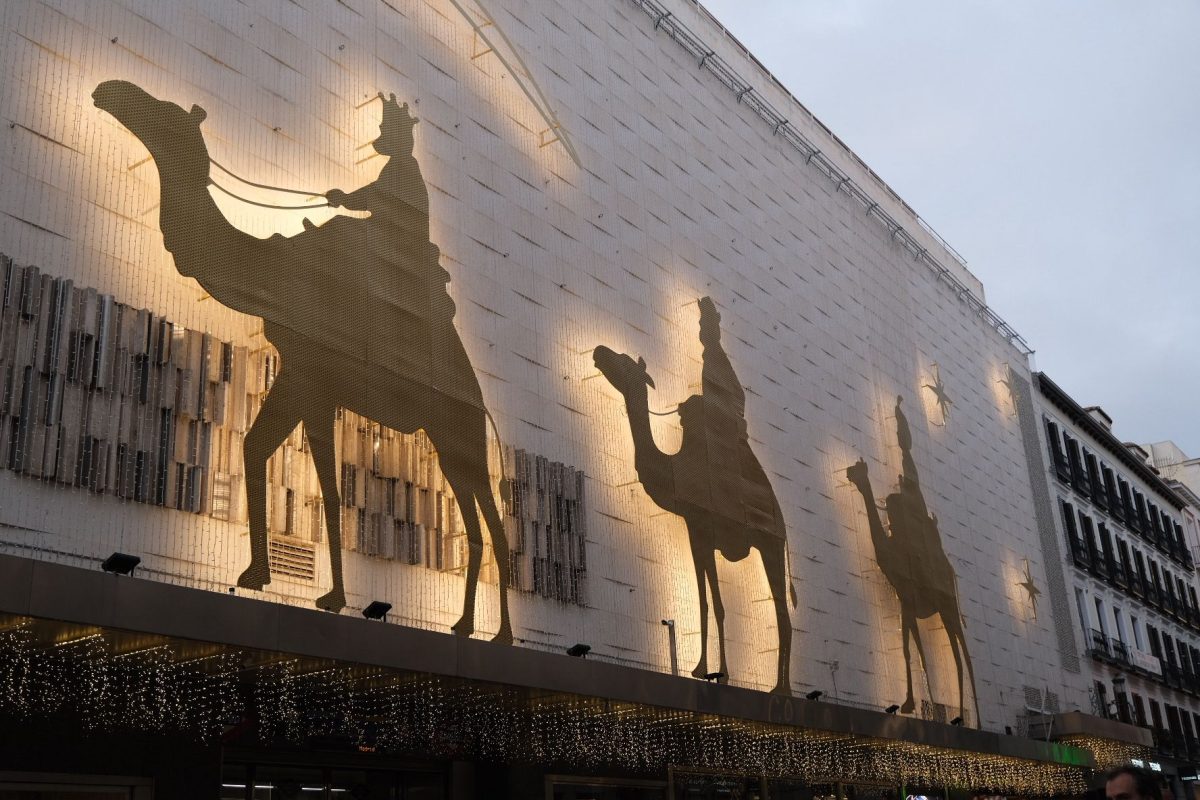
as the day children receive gifts, symbolizing the Magi’s offerings. Over time, festive parades called “cabalgatas” became central to the celebration, turning the arrival of the Three Kings into a joyful cultural event filled with music, sweets and community gatherings.
“My grandmother used to bring me to Madrid when I was younger. She wanted us to see the cabalgatas and the belén every year,” said Nelia Illanes, 49.
Over time, Santa Claus also became integrated into the celebrations of many Spaniards. However, Santa did not replace the Kings: instead, he was added to pre-existing family traditions. Now, some children get a small gift from Papá Noel on Christmas and bigger ones from the Reyes on Jan. 6.
As stated in Britannica, the historical figure behind Santa Claus is Saint Nicholas of Bari, a Greek bishop born in the 4th century, famous for his generosity toward those most in need. Born wealthy, Saint Nicholas used his family fortune to help the poor discreetly, leaving coins in the windows or chimneys of those facing economic hardship.
Santa’s tradition of leaving gifts soon spread globally, eventually becoming prominent in European countries.
“I noticed him more as I got older, and suddenly every shop had Santa somewhere,” said Conde.
On Velázquez, Café & Té is decorated with the red and green colors of Christmas. The windows are lined with soft yellow lights, and on the counter they have placed small figurines of Santa Claus, looking worn from being unpacked every December.
Just a few steps down, Flying Tiger is decorated very similarly. Their whole facade is covered with fake gifts stacked to the top of the door, shiny red bows, and a sign announcing, “Santa passes by this house.” It’s the kind of decoration you can not ignore.
The Santa Claus we know today, with his characteristic red suit, is largely the result of Haddon Sundblom’s illustrations for Coca-Cola advertisements in the 1930s. As explained on the Coca-Cola Company website, although the soft drink company did not invent the character, its advertising campaigns helped create this image in the collective imagination. Britannica explained that the choice of the color red, associated both with the brand and with the figure of Bishop Nicholas, strengthened his global appeal
But many hope for the Three Kings to remain at the heart of Christmas.
“The religious part, we must keep the meaning of the birth of Christ for Christmas and the gifts for Jan. 6,” said Ronan Moaligou, an insurance worker. “I like the modern touches, the lights and markets, but I don’t want them to replace the tradition.”
“It’s what I grew up with,” Moaligou added. “I still remember being a kid, waking up before sunrise on Jan. 6 because I swore I heard the camels on the balcony. My brother and I would run to the living room and find the Kings’ gifts near the ‘belén’ my mother set up every year. She always left a trail of candy leading to the sofa, as if Melchor himself had dropped it rushing out the door. That feeling… I don’t want children to lose that.”
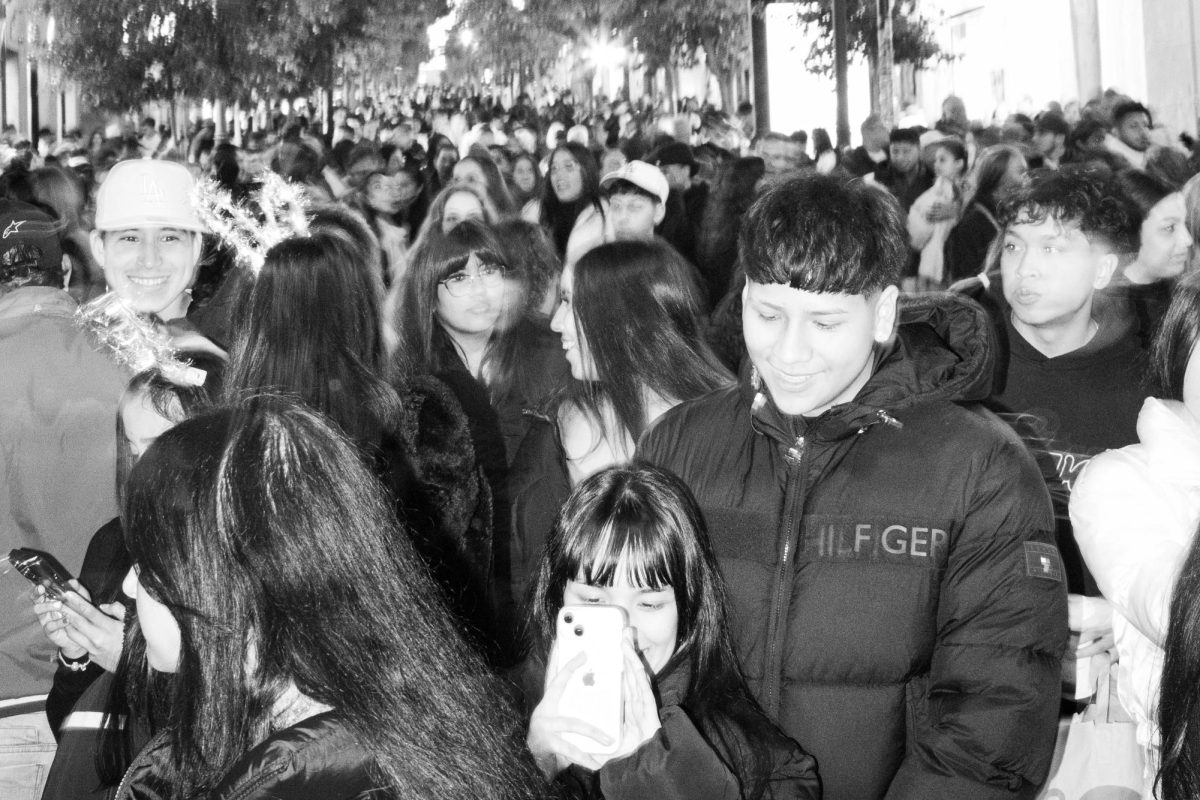
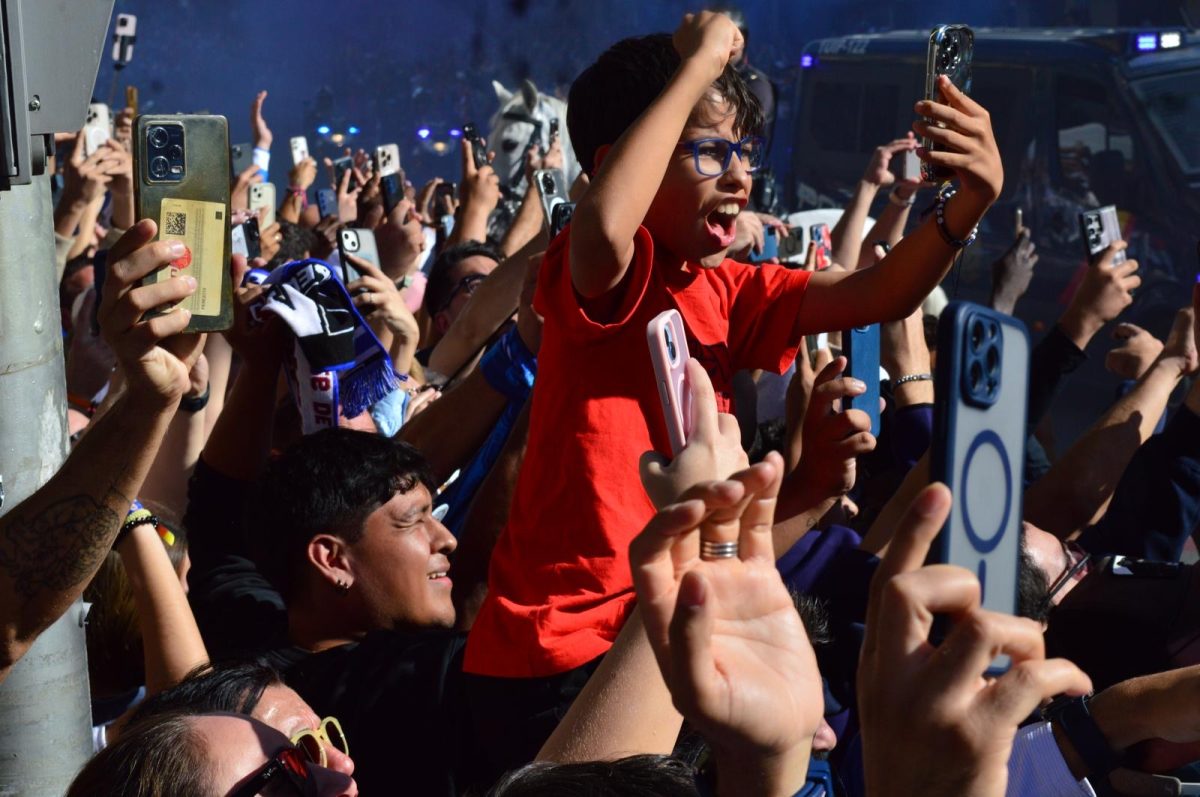
So despite the growing presence of Santa Claus, the heart of the season for many Madrileños still beats on the evening of Jan. 5 when families gather along the streets for the “Cabalgata.”
“I still remember my first ‘Cabalgata,’ I was on my father’s shoulders, trying to catch the candies thrown,” said Miya Amor, a law student at IE University. “My mother would wrap a scarf around my face because it was freezing— but I didn’t care. The lights, the drums, the Kings waving from the floats, it felt like the whole city was celebrating with us.’”
Having spent seven Christmases in Madrid, Amor recognizes that the dynamic has shifting, allowing for the coexistence of many dissimilar religions.
“Traditions are evolving. Traditions shift with the city. It allows people from Madrid to choose what to follow and to create a space that keeps the magic alive for families,” she said. “I love Madrid during Christmas because even though I do not celebrate it, I can go with my friends to the markets and get hot chocolates.”
For Zineb Berrada, a psychology student who has been in the city for six years, the magic of Christmas is elsewhere.
“I hope Madrid never loses the long walks through the Christmas lights. That’s the heart of the season for me. I just love the spirit and the energy that the city holds during that time of the year.” she said. “If you were to ask me, what makes Madrid so special, it is the markets, they make the city feel alive and connected.”