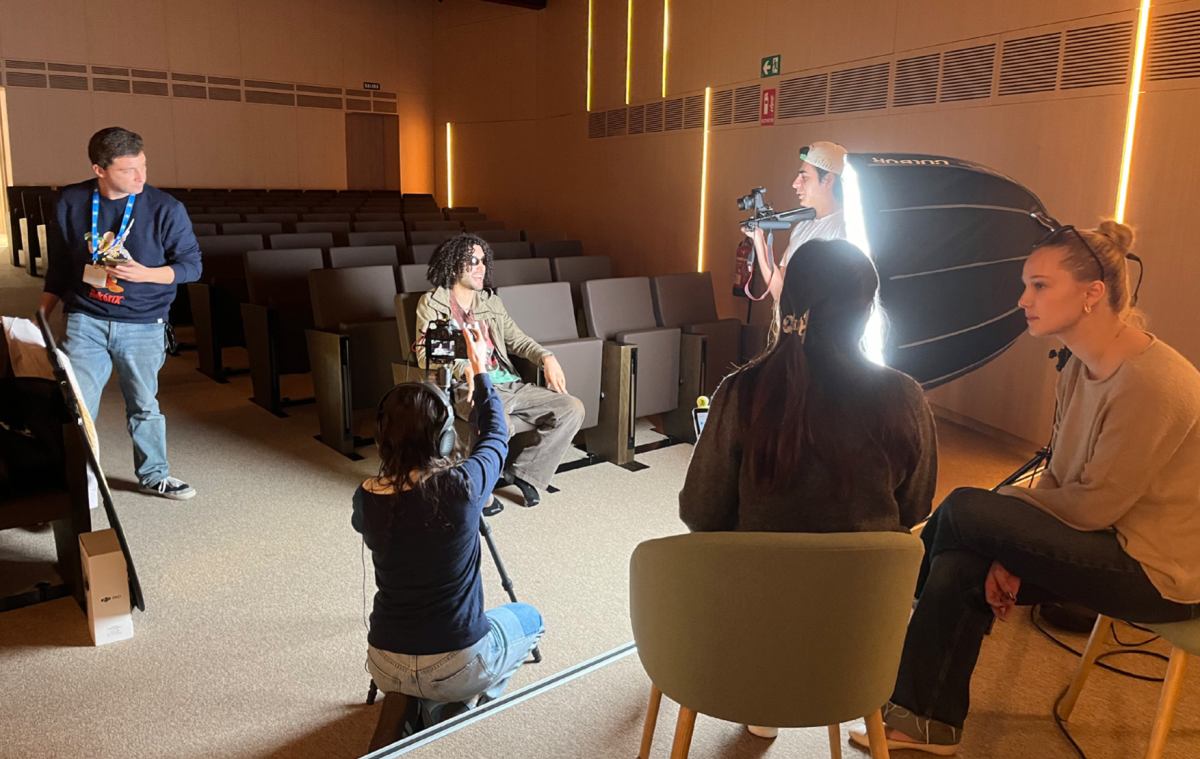





















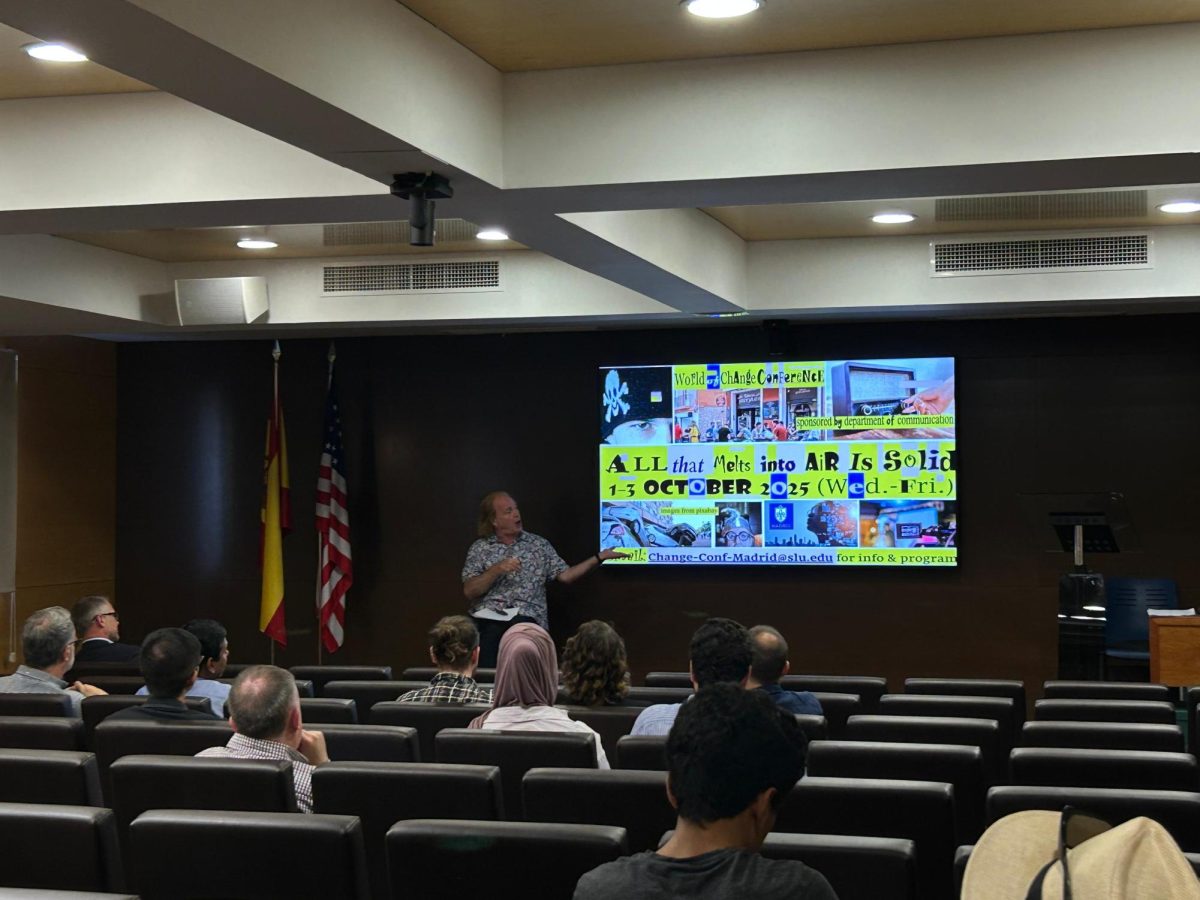
Thirty-seven speakers representing 19 universities spoke to a crowded auditorium at the October conference, All That Melts into Air is Solid.
The conference, titled after the Karl Marx quote “all that is solid melts into air,” centered on the themes of modernity and global change.
“Change (is) something that I thought had so many dimensions to it,” said conference host and keynote speaker Brian Goss.
“These mechanisms of markets and convulsive change have accelerated,” said Goss. “It’s all on steroids as compared to what Marx was observing in the 19th century.”
Radha S. Hegde of New York University was the first panel member to speak. Hegde discussed the class divide in post-colonial India, arguing that the division is intensified by the English language medium in education.
“Cutting across layers of Indian society, there’s a new recognition of the value of English, and this is the intoxication with the cultural capital that it promises,” said Hegde. This promise of cultural capital, according to Hegde, is often an empty one.
“We need to move away from dwelling on capitalist forms of destruction,” said Hedge, whose attention is focused not on the past, but on the future.
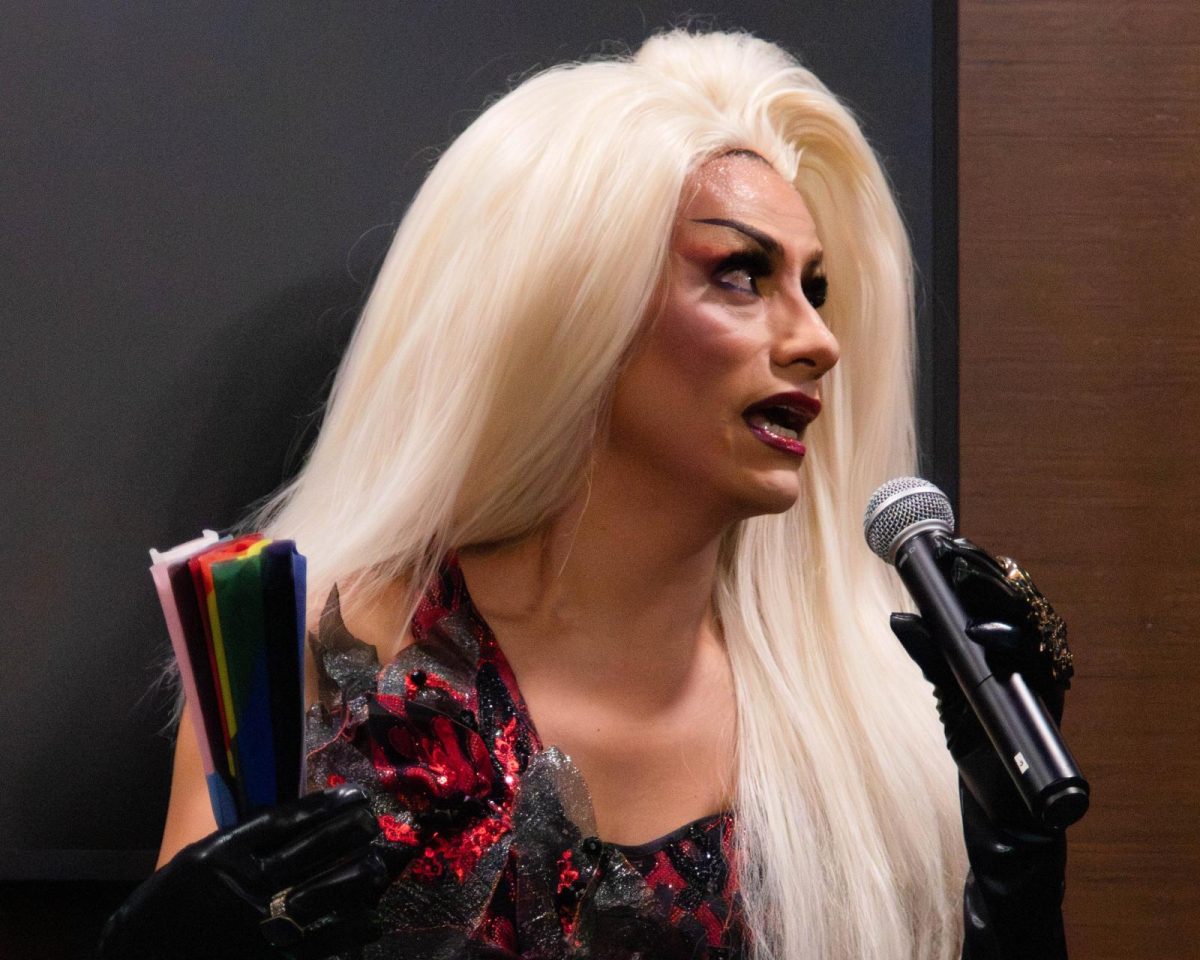
Hegde’s presentation was followed by a discussion of the impact that colonization has had on art and imagination, delivered by Cameron McCarthy, and an exploration of the controversy surrounding the film Emilia Perez, by speaker Angharad N. Valdivia.
Valdivia discussed the backlash that Emilia Perez received in light of several offensive social media posts from the lead actress and public criticism of the film’s stereotypical depiction of transgender women.
Both McCarthy and Valdivia focused on the changing nature of media and art, framed by a world that is simultaneously connected by the forces of globalization and divided by rising tensions in the political climate.
Over the course of three days, the conference unfolded with a wide variety of speakers representing universities in the United States, Spain, Brazil, and the United Kingdom, with keynote addresses from Brian Goss and Christopher A. Chávez.
“`[The conference] is about where we are and what is changing in the world,” said panelist Marcia Neeley, “I’m speaking about the power of change.”
Sophia Rogers, a visiting student majoring in political science and biology, attended the conference because it was discussed in her Politics in Asia class.
“The most memorable thing that I learned was how economic and political pressures can shape media,” she said. The session she attended discussed how news outlets such as the Los Angeles Times and NPR geared their content towards certain audiences to establish themselves and find funding when they were first starting out.
Lisa Hang contributed reporting.