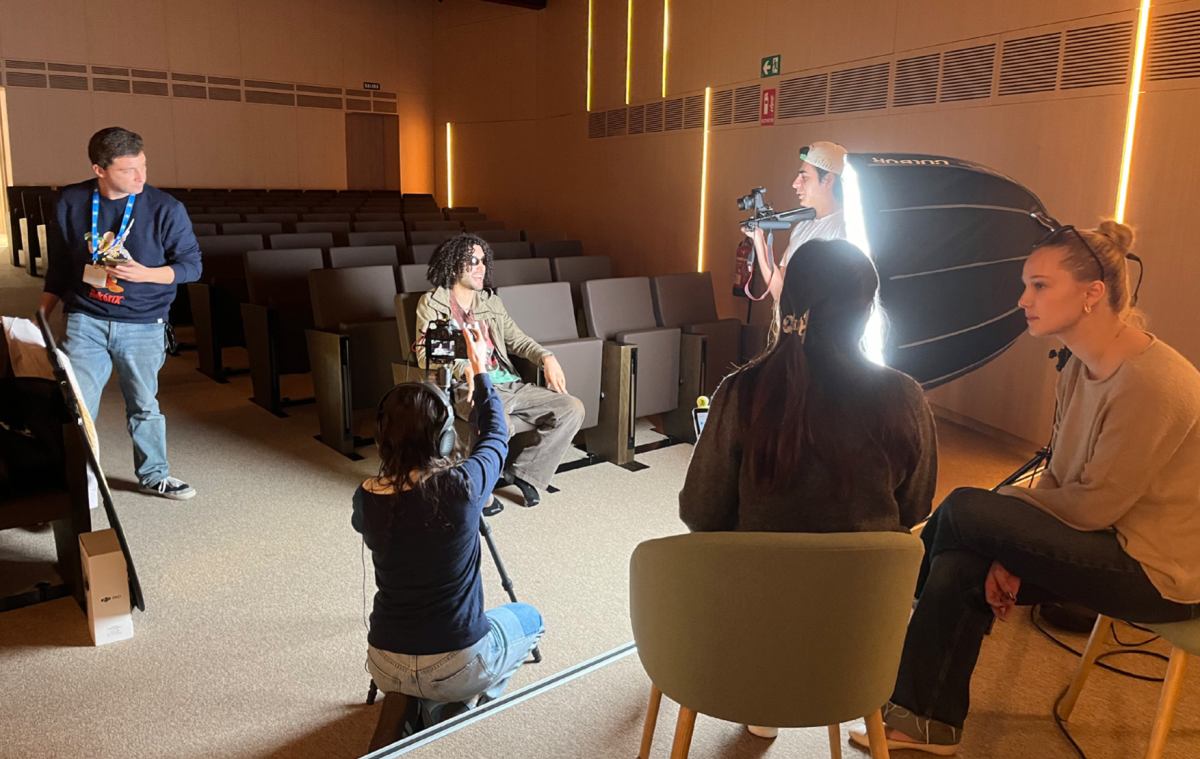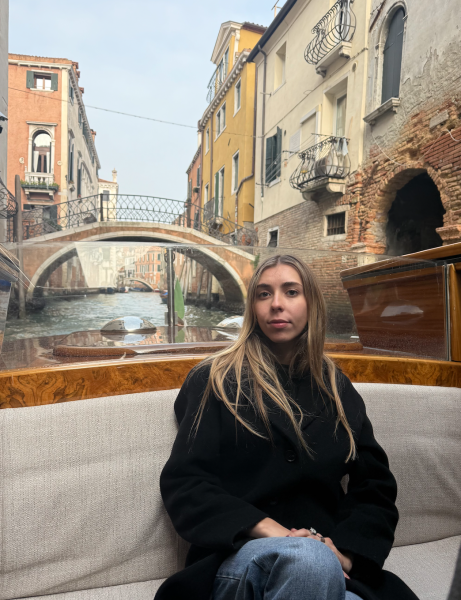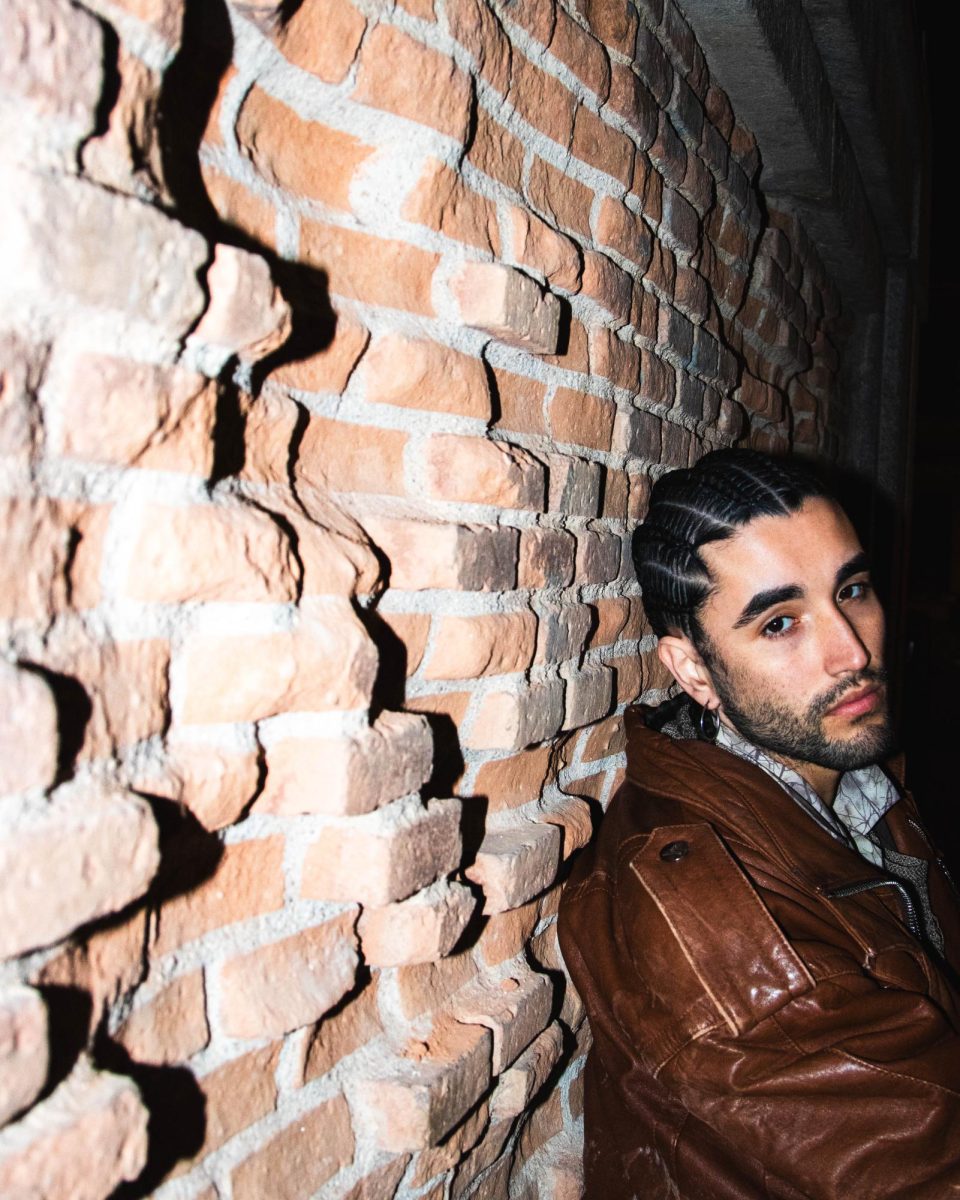
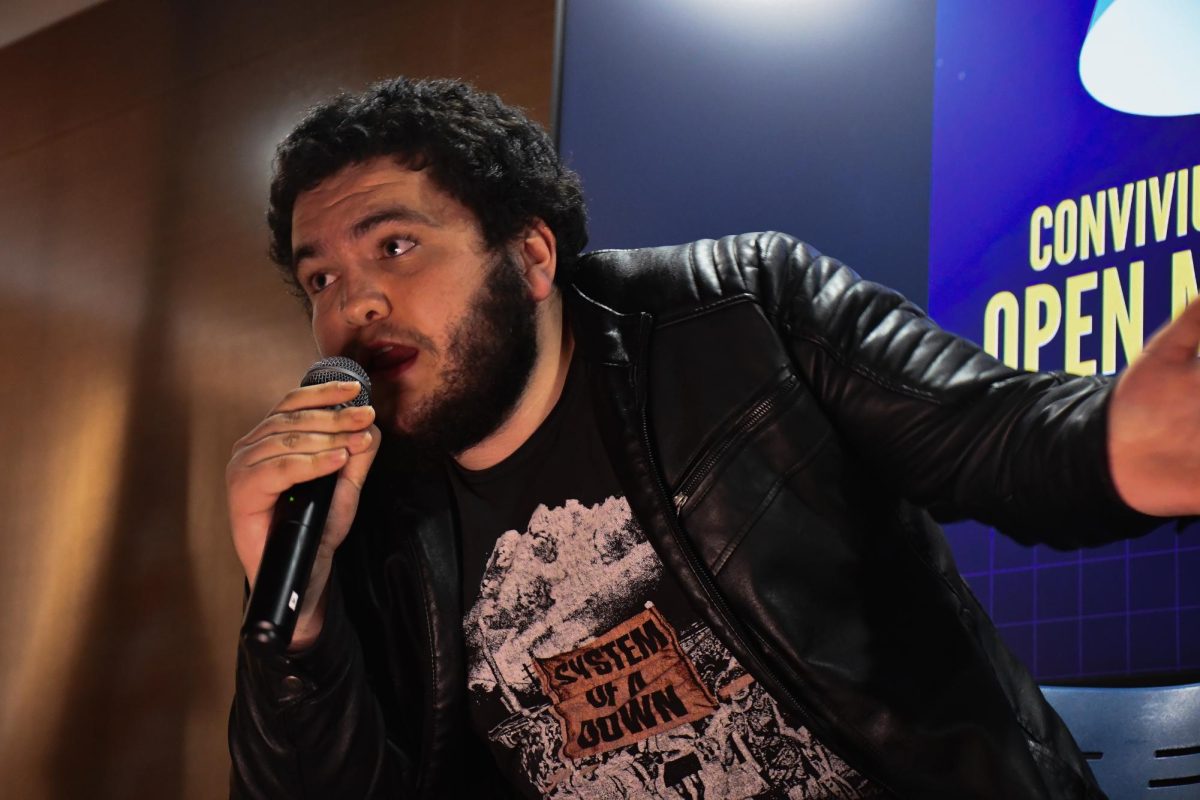

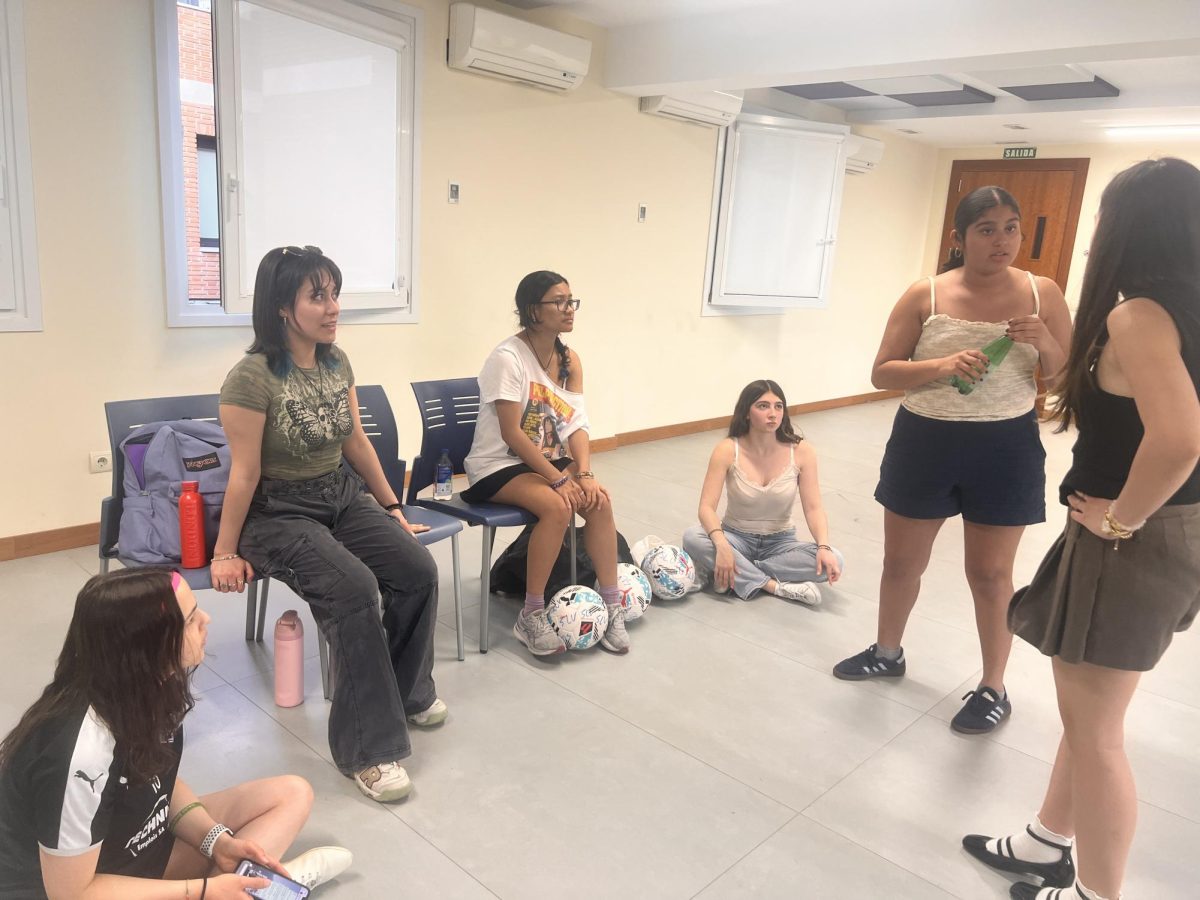








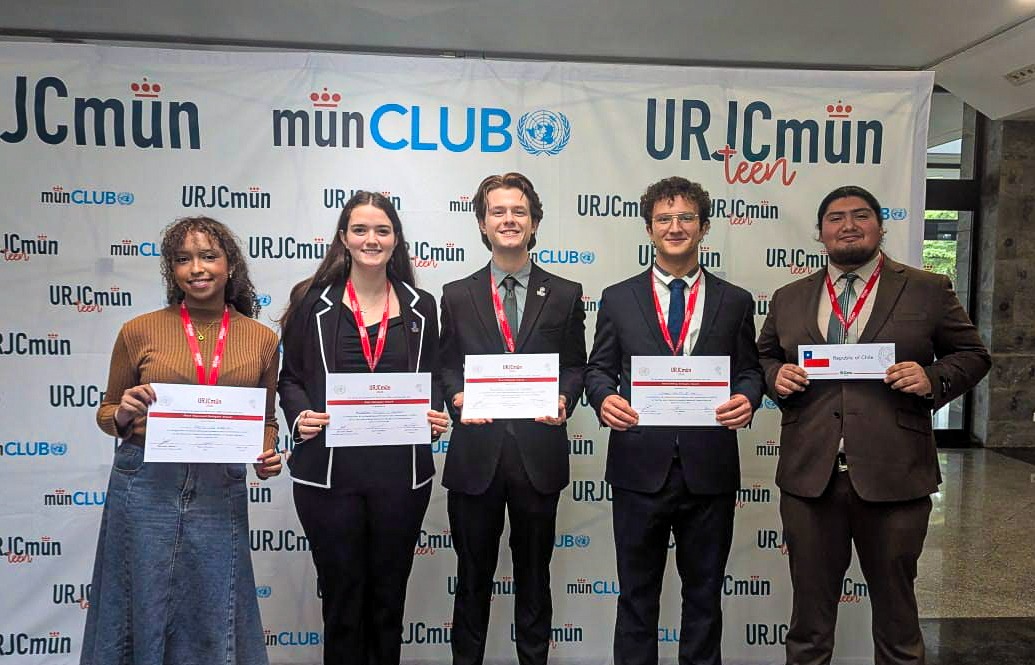












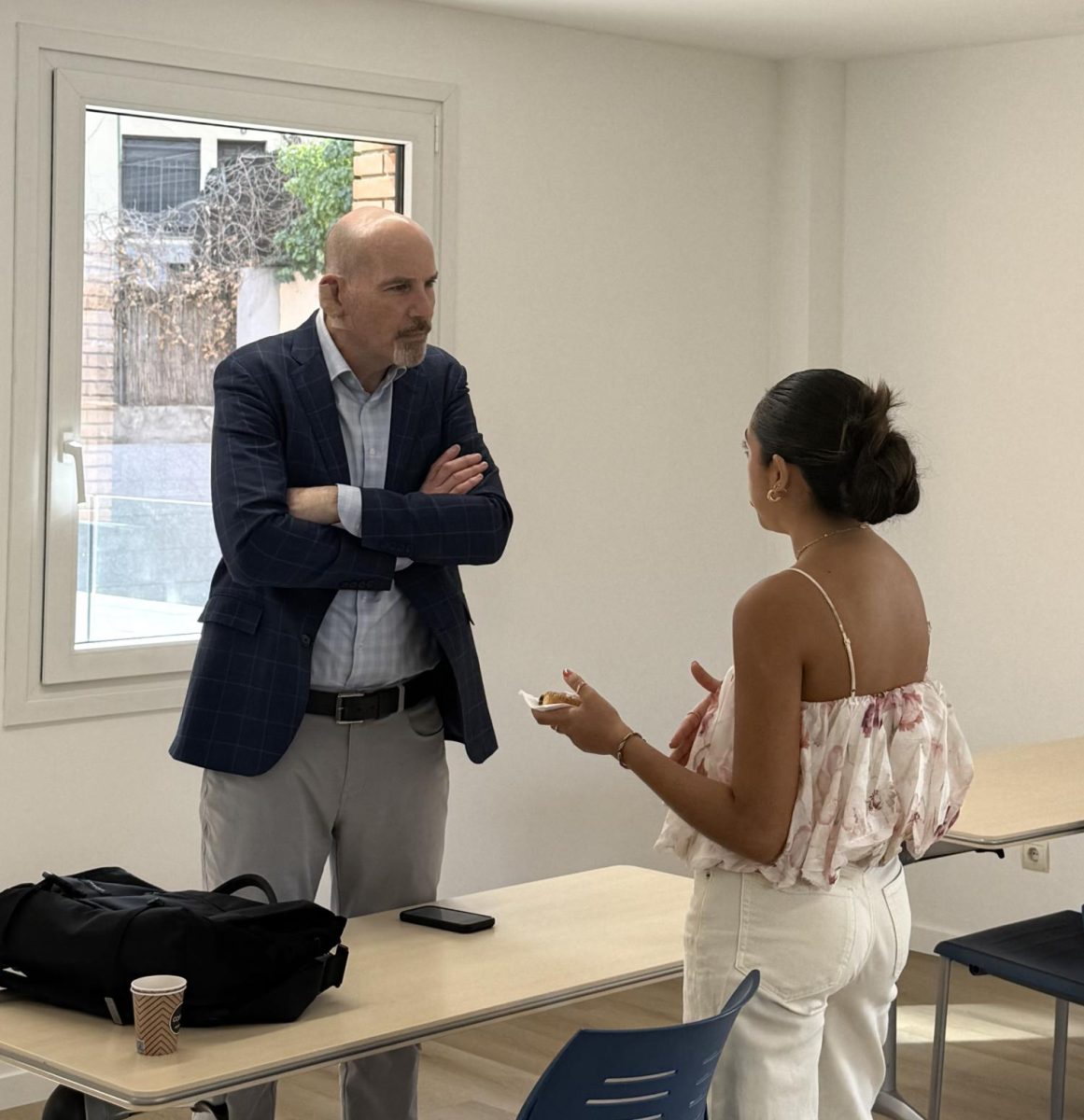
Club leaders had the opportunity to meet the new president of Saint Louis University, Edward Feser, on Oct. 8. A coffee break with the president was scheduled for 11 club leaders, allowing them to share their experiences and opened the floor to an informal conversation about the Madrid campus.
Feser was appointed as the university’s 34th president just two months ago. Before joining SLU, Feser served as provost and executive vice president at Oregon State University for eight years.
He succeeds former SLU president Dr. Fred Pestello, who was president from 2014 to 2024.
The club leaders took a moment to introduce themselves, explain their roles, and discuss their majors. During the conversations, students brought up what they hope to see improved on the Madrid campus, giving a voice to permanent students who didn’t attend.
The topics raised were campus resources, communication between Madrid and St.Louis students, and support for permanent students as study-abroad numbers rise. Feser listened to each concern and supported stronger connections across SLU’s global community.
The STEM program and the question of adding more majors to the Madrid campus.
As the university campus is expanding, Feser started off asking leaders what they thought about the potential addition of more students to the campus.
“I think that we could probably support a small additional number of students,” Feser said. “But I think that you are also pretty tight. And then of course, in this neighborhood, it’s hard to expand. How large would you guys want to be?”
For many student leaders, who are all permanent students, the conversation was centered on maintaining SLU-Madrid as a close-knit community.
“I think what’s so unique about our school is that our campus is so small, it does feel very… homey. I know that I decided to study at this school because I can get to know my professors on such a personal level,” Grace Miclot, President of the Pre-Health club, said.
As a STEM major, Miclot voiced concerns that many other STEM majors have shared, ensuring that growing programs receive the same support as those on the main campus.
“We just recently added biology as a major, and I’m so happy that we’ve done this,” she said. “But it’s also important to have resources for the students once we have these kinds of majors.”
According to STEM students, most of these new science majors offered at SLU-Madrid require students to return to the main campus for at least two years due to the limited resources in Madrid, because of how new the majors are.
“I feel like a lot of students have to choose between finishing their degree here or changing schools,” Miclot said.
Mackenzie O’Leary, president of the Environmental Club and Community Garden Club, agreed.
“I am a part of the first group to complete my degree in environmental studies here, and I just want to say we went through a lot,” O’Leary said. “We don’t have many research opportunities. This is why a lot of students will do two years here and then have to transfer back to main campus.”
Both O’Leary and Miclot felt optimistic about the campus’s growing visibility in Europe for accreditation. However, they both emphasize the need for additional academic resources to support the STEM department.
SLU-Madrid student body
In recent years, the campus has expanded with the addition of the Manresa and Viña buildings. The student population has continued to increase, with many students attending for only a semester. O’Leary emphasized the importance of fostering a sense of community across campus amid the influx of study-abroad students.
“We always get more permanent students, but there will always be the same number of study abroads,” O’Leary said. “Being club presidents, we see more involvement from permanent students, but our clubs are so small because people are constantly changing every semester.”
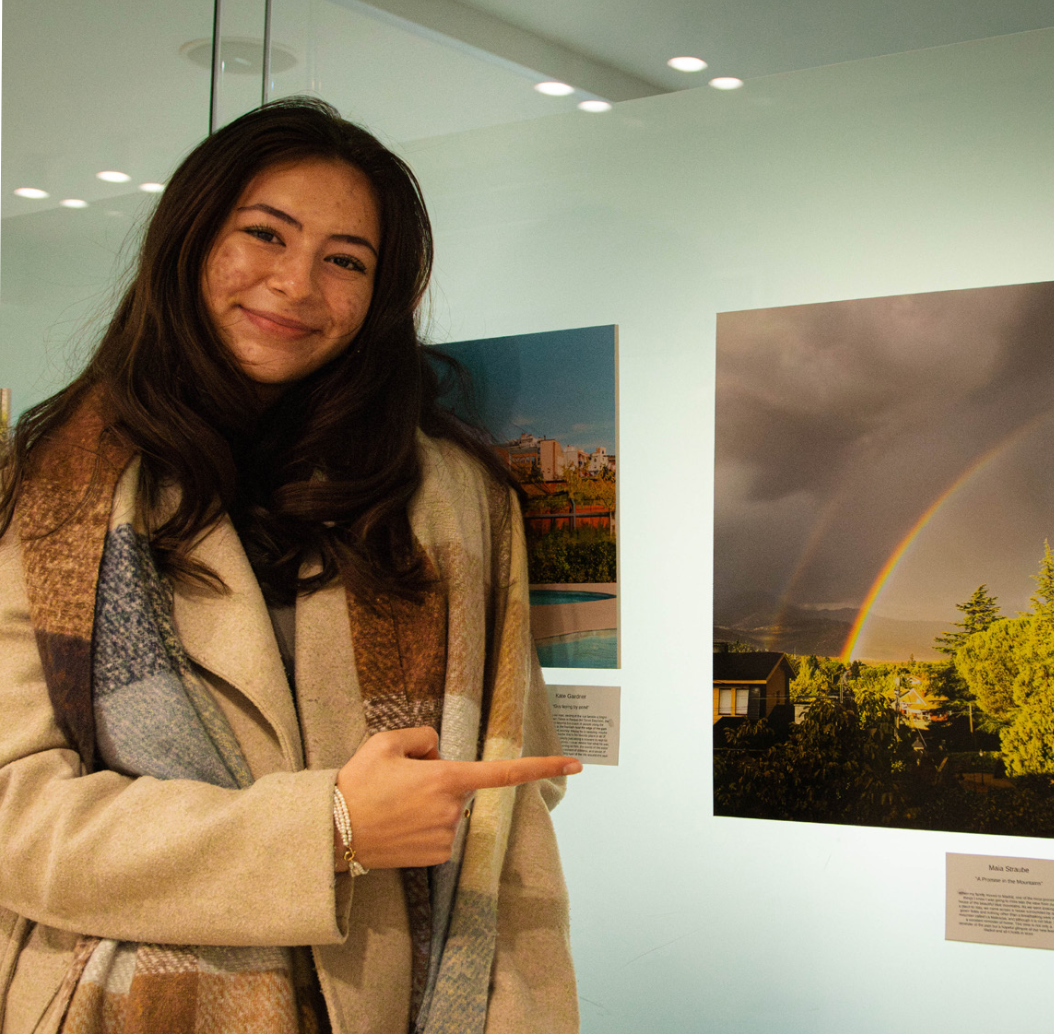
Kyle Sidewell, co-president of the Photography club and a student who works in admissions, said that SLU-Madrid’s dual identity as an American university in Spain makes this gap harder to close.
“When only half of the university is made up of permanent students, it’s hard for the other half to become more involved with clubs,” he said. “There’s a lot of development happening, new majors, new programs. If I had one suggestion, it would be to dedicate our energy to a few specific areas and make them really strong.”
Although study-abroad students may bring in more funding, it often feels like they are getting most of the attention. Permanent students can’t help but notice this difference.
“Study-abroads do bring a lot of funding, a lot of permanent students feel as if study-abroad programs are getting more than we are,” O’Leary said. “Institutions are businesses after all, so we all understand that.”
A possible addition of a four-plus-one program
The two-plus-two and three-plus-one programs are pathways that allow students to split their studies between the SLU-Madrid campus and the main campus in St. Louis. Students can either spend two years studying in Madrid or three, finishing their final years in St.Louis. This will allow students to earn their degree while experiencing both campuses.
Feser discussed expanding these pathways between the two campuses, opening access to more resources not offered in Madrid and to networking opportunities in the United States.
“The good thing about the three-plus-one, two-plus-two and expanding those programs is that we could think of four-plus-ones,” Feser said. “If you do your degree here for four years and then a master’s, maybe you’re able to do that in an accelerated way.”
O’Leary cautioned that many students aren’t aware of these possibilities, emphasizing the need for clearer communications between the administration and students about these opportunities.
“The communication isn’t always there,” she said. “Some people don’t even know they can stay here for longer than a year.”
The four-plus program would help students earn their master’s degree while jump-starting their bachelor’s. This will allow students to earn both degrees at an overall lower cost than what a master’s program typically costs.
“A lot of students will benefit from that. Especially because there are a lot of Master’s programs on the main campus that are not talked about enough.” O’Leary said. “I think that would be something a lot of students will be interested in.”
The Jesuit Mission
SLU-Madrid’s Jesuit mission is a big part of shaping campus life, even if students come from different religious backgrounds. Cura Personalis is a Jesuit concept of caring for the whole person; it’s instilled in the university core. This mission inspires every student to care for themselves and their whole community. Feser asked if the Jesuit mission is something that students look at when applying to the university.
“I only applied to Jesuit schools, and even though it wasn’t intentional at first, I quickly realized why,” Abby Globokar, President of BokaTalk, said. “The Jesuit mission is really attractive, whether you’re Catholic or not.”
Feser listened as students shared their own experiences with the Jesuit values of SLU-Madrid. As the campus continues to grow, Jesuit principles are central in guiding students, permanent and study-abroad students, together.