













The Pride Club at SLU-Madrid is broadening its mission of promoting LGBTQ+ on campus this semester by hosting social events and offering more academically-driven programs focused on LGBTQ+ history, activism, and awareness.
In early November, the club showed the documentary 1946: The Mistranslation That Shifted a Culture, which investigates how the word homosexual was first inserted into a 1946 English translation of the bible published by Yale University in the United States. The film traces how a mistranslation of the ancient Greek words arsenokoitai and malakoi led to the social stigma that has surrounded LGBTQ+ communities for decades.
In December, the club prepared a World AIDS Day program in collaboration with the Human Rights Club, featuring two guest speakers with direct involvement in the early HIV/AIDS crisis in the early 1980s.
One speaker, Hal Moskowitz, is a veteran and gay-rights activist who has organized demonstrations against harmful government messaging and fought for the de-stigmatization of the LGBTQ+ community for decades. The other speaker, Dr. José Ramón Fernández-Peña, is a board-certified medical doctor who has treated patients during the height of the epidemic and has now had more than three decades of experience at the forefront of HIV/AIDS prevention.
“Both of them actually met in New York in the Gay Men’s Health Crisis movement,” Britney Saras, the president of Pride Club, said. “One saw his patients dying and wanted to help more. The other has been an activist from day one, organizing, protesting, and fighting against the government.”
The club hopes students will learn from history and see how it’s relevant to the present.
“History repeats itself, especially through ignorance,” Saras said. “We’re lucky people who lived through the HIV crisis are still alive to share what they saw. One thing is to read about it in a book, and another is hearing first-hand what happened.”
Having these guest speakers will allow students to gain a perspective of what really happened during this crisis. The club wants students to leave with not only empathy, but understanding of the history and difference between HIV/AIDS. “Many people think that HIV and AIDS mean the same thing, but there is an important difference,” Saras said.
At the heart of the club’s mission, Saras said, is a balance between celebrating pride and educating. “We want to create a safe space for people in our community to better understand our experiences and daily struggles.”
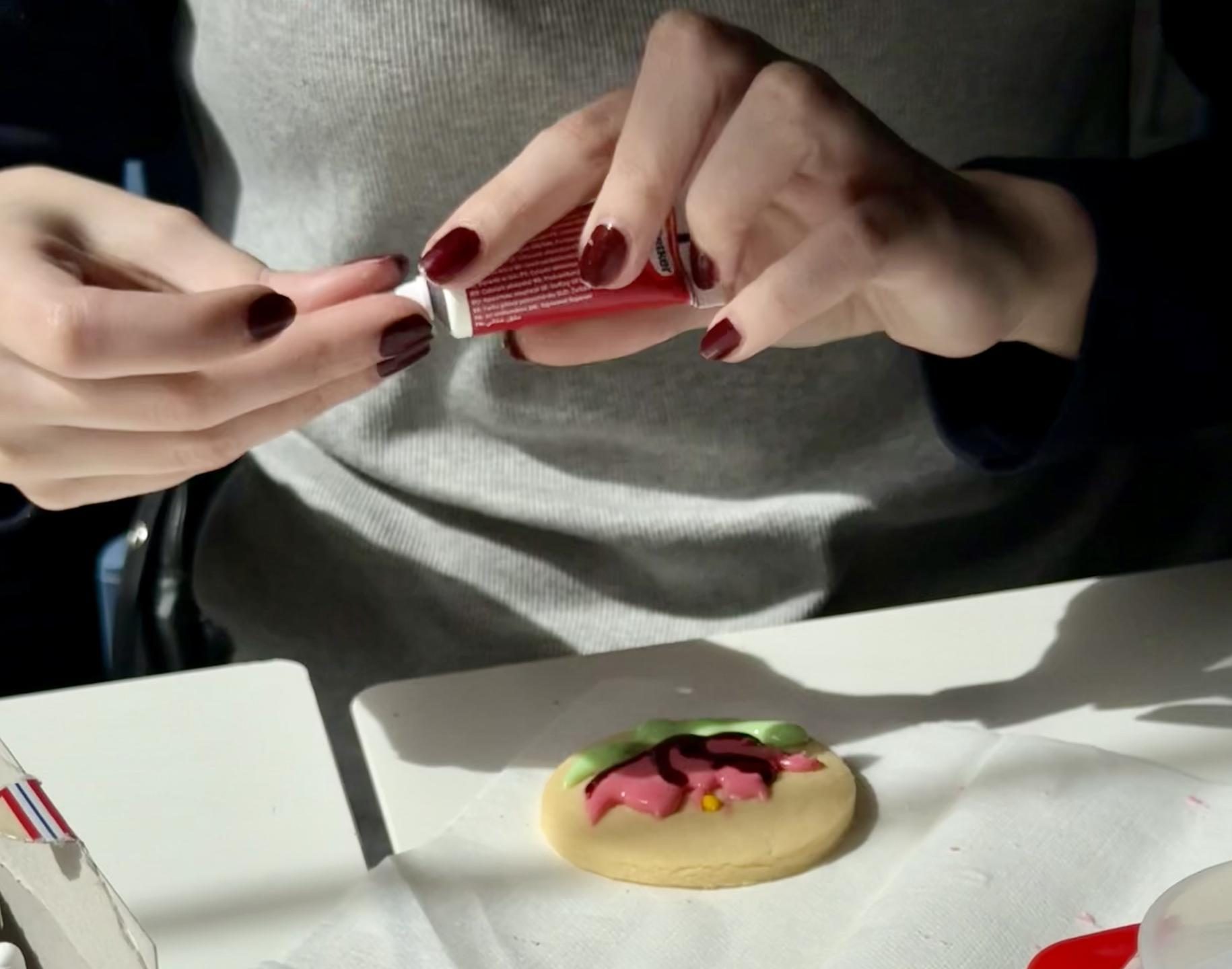
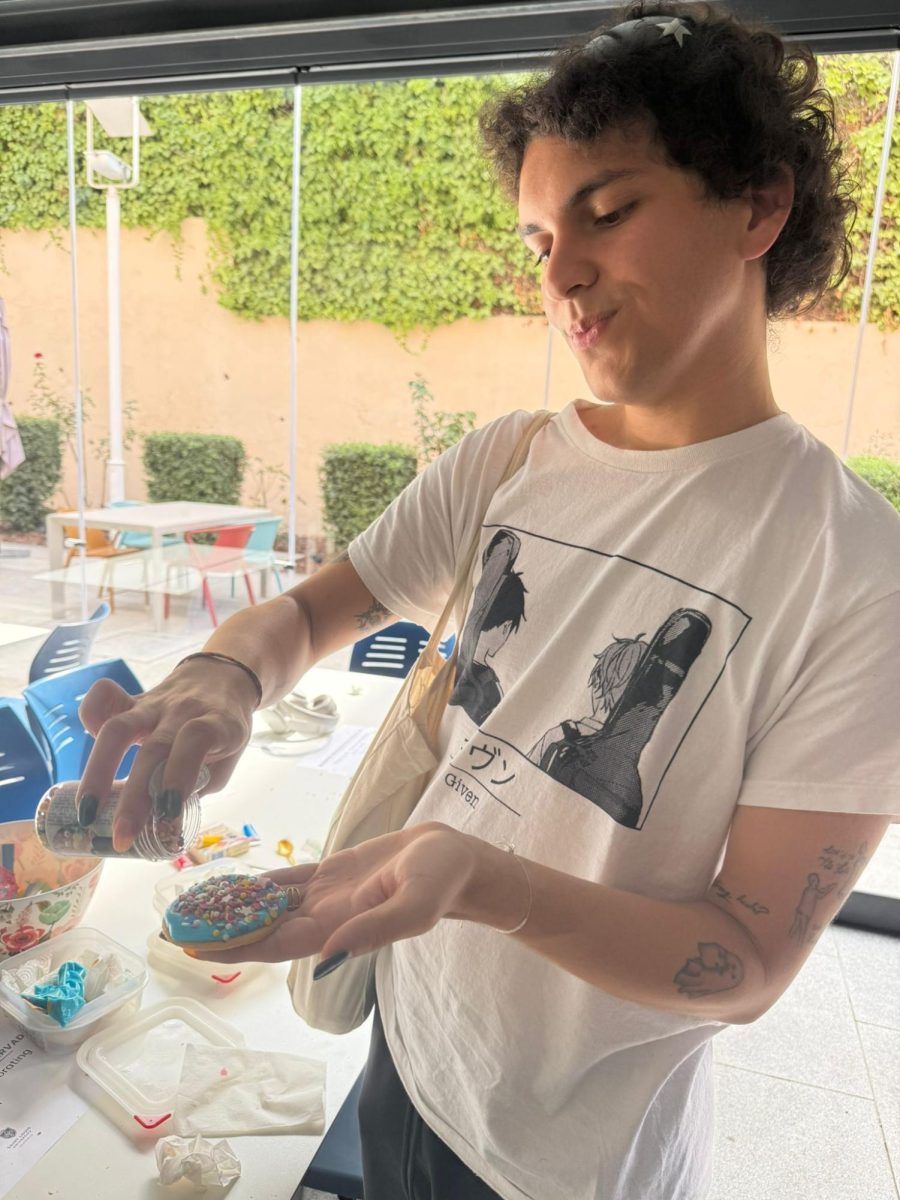
The start of the year really embodied this message of the celebration and community aspect of pride; the scent of sugar cookies and assorted baked goods wafted through the air as the Pride Club invited students to bond over frosting cookies.

Gabriela Rittley, the social media manager of Pride Club, lined the counter with baked goods, including brownies and Nutella banana bread. “I was up until 6 a.m. baking,” Ridley laughed, “but I didn’t mind it… just for today. The Pride Club means a lot to me, and this was my way of showing it.”
For many, the event wasn’t just about cookies, but about community. Ernesto Lange, a junior at SLU-Madrid, said he came to support Pride Club but also got a little carried away.
“The cookies weren’t really the important part. I was happy to be there with my friends,” he said, “but don’t ask me how many I ate. Let’s say three were decorated… and three mysteriously disappeared.”
For the club, it’s important to host social and educational events, blending the two to offer students support, joy, and education. “That is why it’s so important to have club events that reflect on both the social and academic aspects of pride,” Saras said.